

I had been looking at various commercial cat furniture options, but nothing offered the right combination of vertical climbing fun, durability, and a clean, aesthetic look for my home. That was the core problem: my cats needed a dedicated, engaging vertical space, a scratch post/climbing structure that led to a high perch but I wanted to build it myself to ensure it was sturdy and perfectly tailored to their athletic needs.
I decided to embark on a DIY Cat Nook project, aiming to create a fun, multi-functional piece that my cats wouldn’t immediately destroy and that didn’t look like a carpeted eyesore in my living room.
The construction of my new DIY Cat Nook required some material choices because there is a lot of crucial modification. I built the climbing pole using 100% PVC fittings, which are incredibly strong, then wrapped them tightly with rope and secured the ends by threading them through the pipe.
For the perching area, I avoided the typical flimsy cat-tree carpet by using a singular piece of circular wood covered with a durable carpet for better grip. During the initial build, I noticed my cats struggled with the dismount from the very top perch, so I quickly added a small, hidden platform behind the main pole to act as a crucial step for easy access and retreat.
The definitive solution is a successful, minimalist DIY Cat Nook that is both a hit with the felines and simple to maintain. The final design, which utilizes non-traditional toilet flange mounting brackets to secure the PVC pole to the wall, give me the clean look I want and a stable structure that has already lasted three years.
My design ensures longevity because replacing the rope, once it eventually frays, is a simple matter of removing four screws so my cats now constantly occupy the perch, enjoying their high-up view of the living room and kitchen, proving that this enjoyable solution was far superior to any store-bought option.
15. Window Perch for Sunny Views
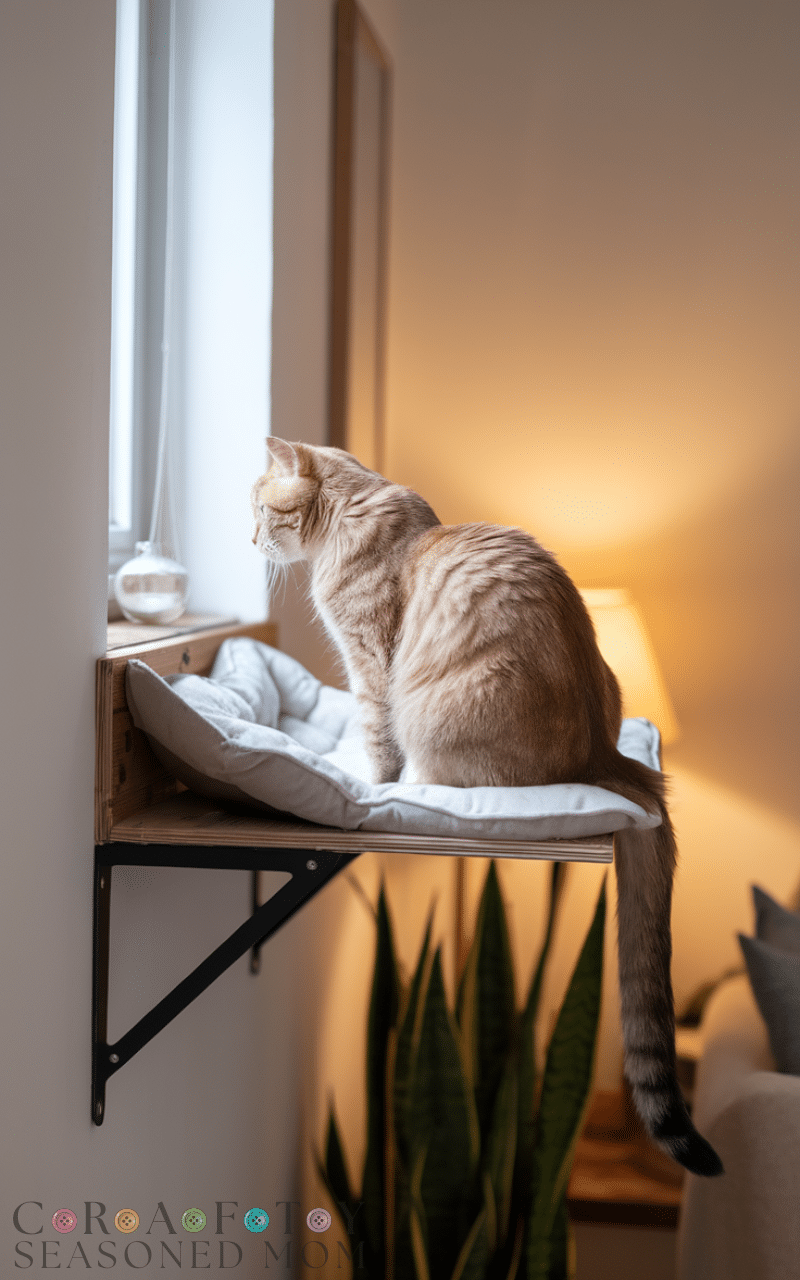
Creating a window perch is perfect for DIY cat nook ideas for small spaces because it gives your cat a cozy spot to watch the world outside and soak in the sun. You can use a simple sturdy shelf or repurpose an old side table, securing it safely to the wall at window height.
Once you add a soft cushion or a plush blanket, this setup provides essential vertical space without taking up a single inch of floor room. Cats love observing birds and outdoor movement from above, which keeps them mentally entertained and reduces boredom throughout the day.
14. Hanging Cat Hammock
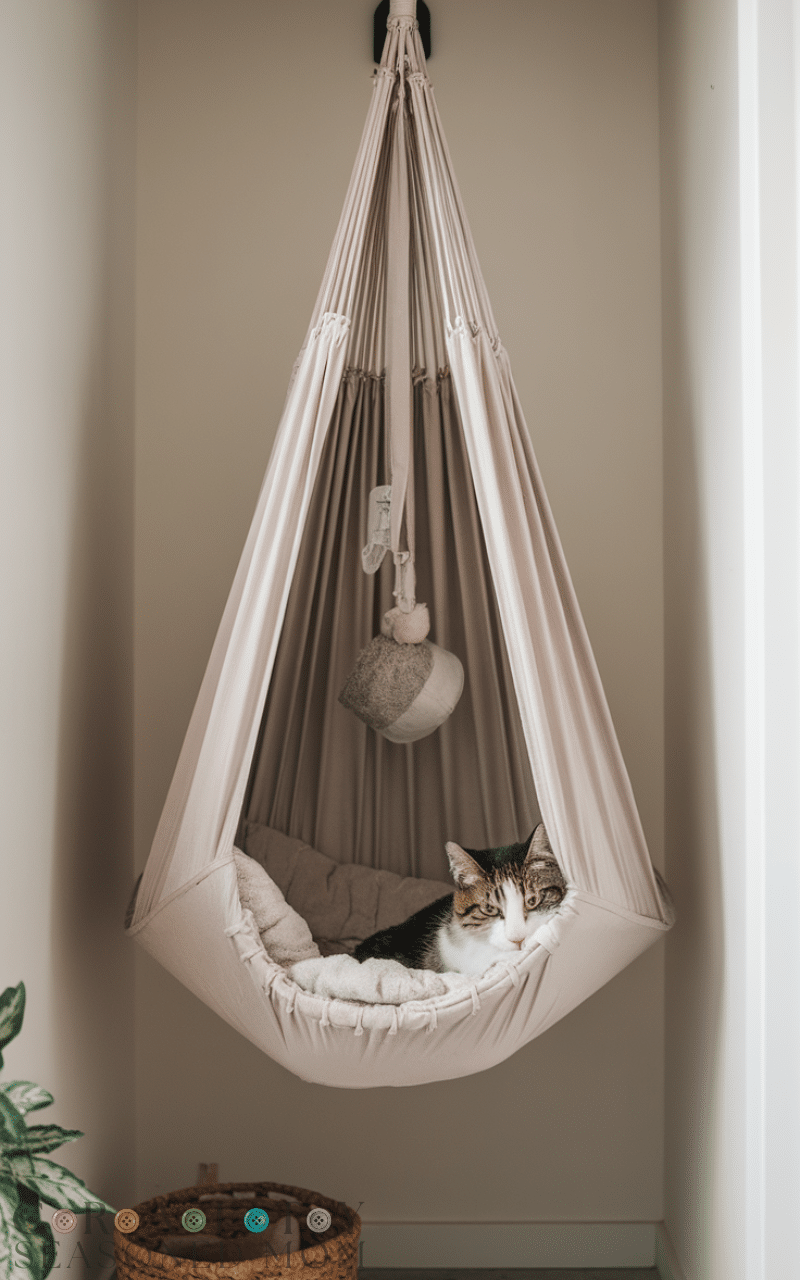
A hanging cat hammock is a clever option because it adds lounging space without cluttering your walking paths. You can attach it to a sturdy wall using brackets or even suspend it under a coffee table or a high shelf using durable fabric or netting.
This project requires minimal tools and investment while providing a unique, elevated perspective. Cats enjoy the gentle sway and the feeling of being “hidden” in mid-air, making this a stylish and space-saving retreat that is easy to remove or relocate as needed.
13. Corner Cat Shelf Ladder
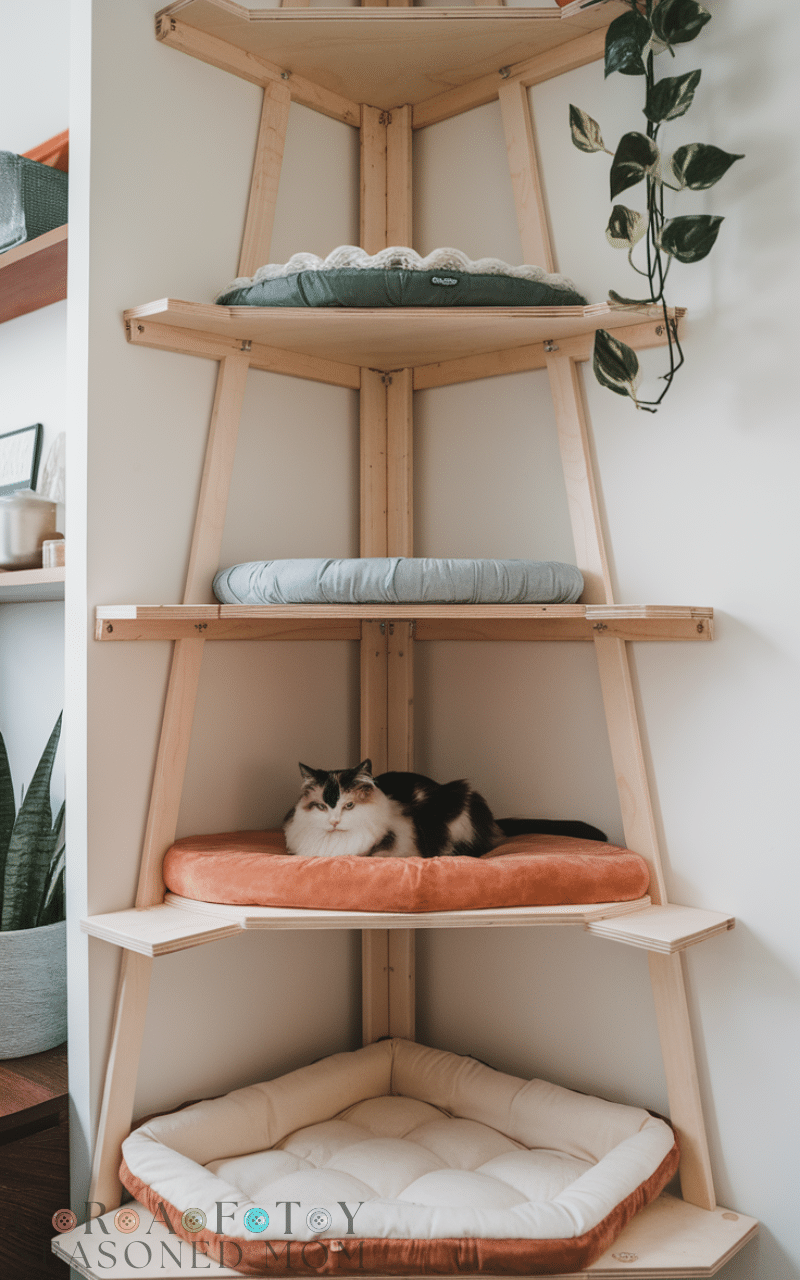
Building a corner ladder of shelves is ideal because it utilizes unused vertical corners that often go to waste. You can use wooden boards or repurposed shelves secured at staggered heights to create a climbing playground that encourages your cat to stay active and fit.
Adding non-slip cushions or soft fabric to each step ensures safety and comfort during high-speed ascents. This ladder adds a modern decorative touch to your home and is fully customizable to your specific corner dimensions, making it a functional and compact solution.
12. Box Fortress with Soft Bedding
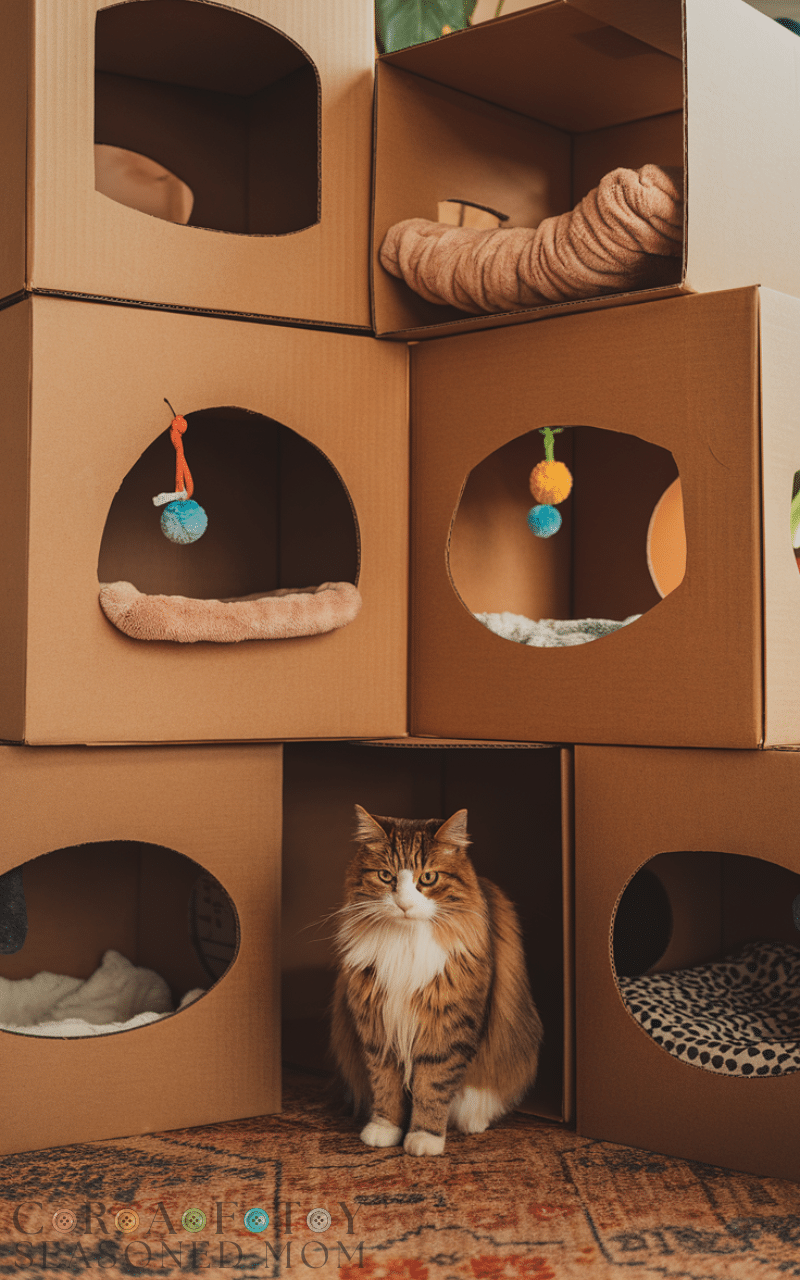
A simple box fortress is perfect for budget-conscious owners because cardboard boxes are inexpensive, easy to replace, and provide the enclosed privacy that cats instinctively crave. You can cut entry holes, stack them in creative layers, and use non-toxic glue to secure the structure.
Adding blankets or old sweaters inside creates an immediate cozy hideaway that stimulates your cat’s natural curiosity and desire to hunt and hide. This setup is lightweight, easy to move, and can be easily recycled and redesigned whenever your cat needs a change of scenery.
11. Wall Mounted Cat Condo
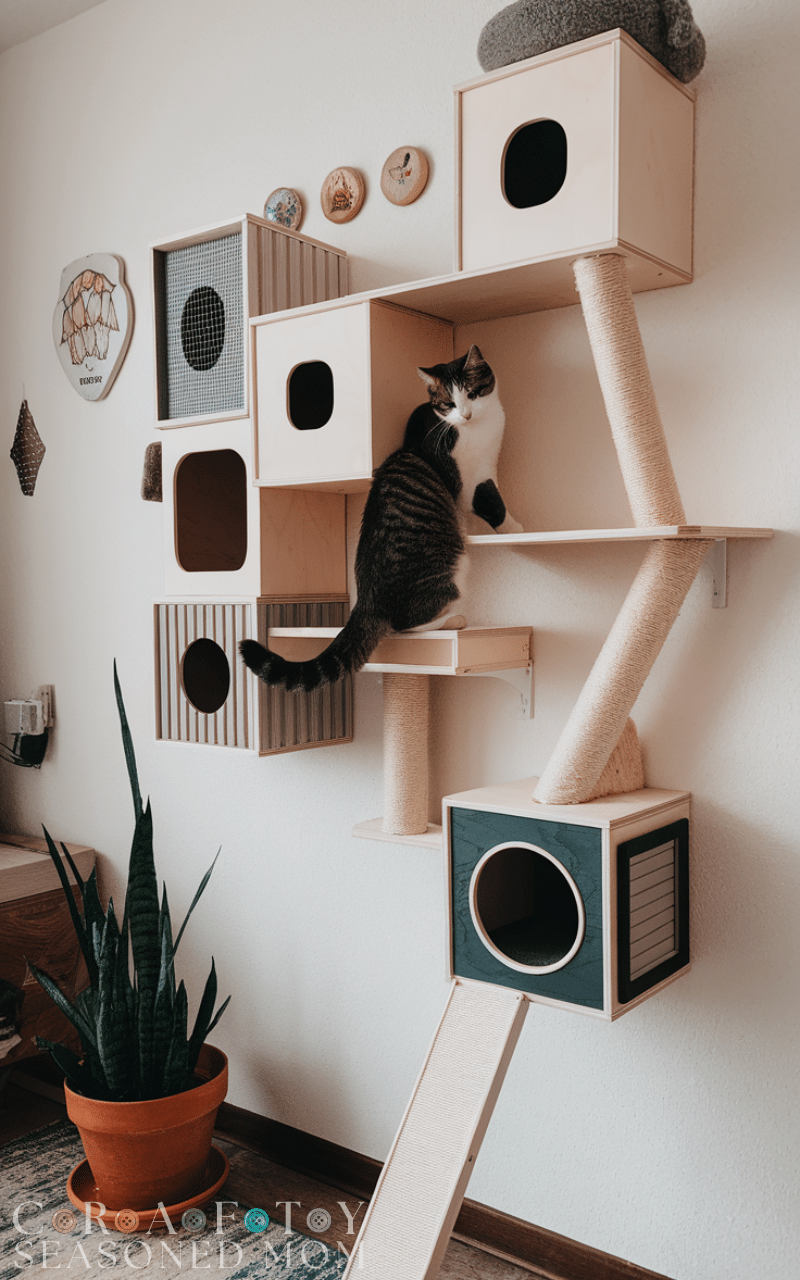
A wall-mounted cat condo is a great solution because it completely frees up the floor area for human furniture while creating a multi-level adventure zone. You can build simple wooden boxes with circular openings and connect them with bridges or ramps, securing them safely into wall studs.
This gives your cat a much-needed sense of adventure and a territory they can call their own. The materials are easy to source, and you can paint or carpet the boxes to match your home decor, making this a visually appealing and highly practical addition to a small room.
10. Under Shelf Hideaway
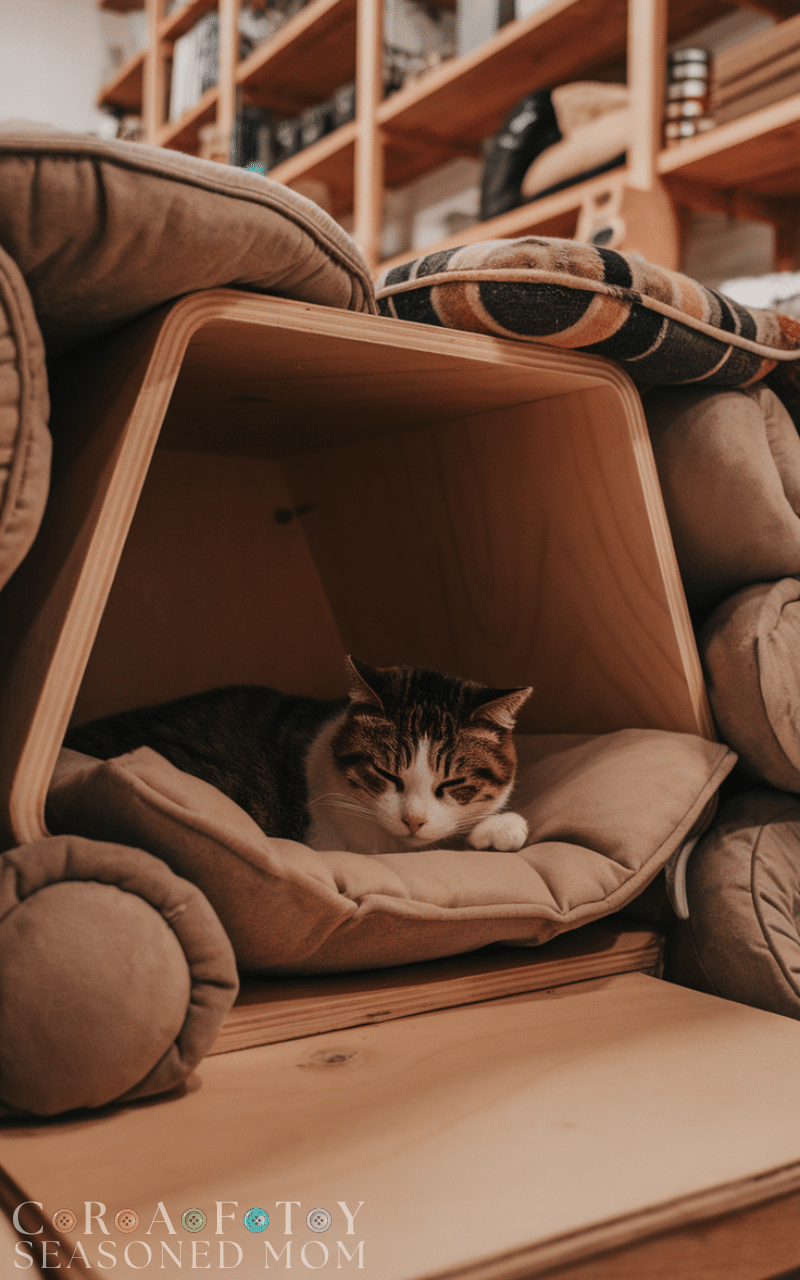
Transforming the space directly under existing shelves is a smart choice because it turns “dead space” into a cozy resting spot. You can attach small cushions or a fabric sling to the underside of a bookshelf or desk, creating a private nook where your cat can feel safe and hidden.
This requires no major renovation and uses minimal materials, keeping your floor space open for other purposes. Cats feel particularly secure in semi-enclosed areas where they can see out but can’t be easily seen, making this a budget-friendly and efficient comfort zone.
9. Hanging Basket Bed
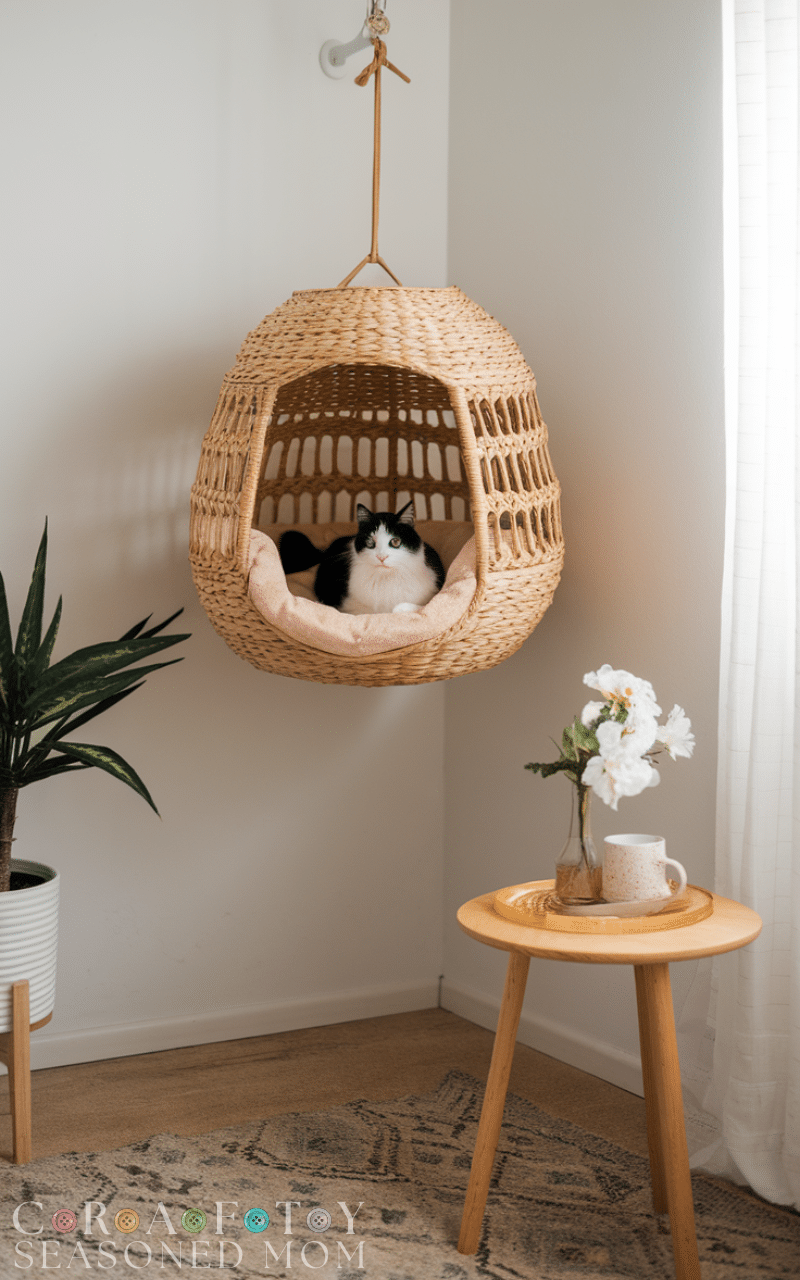
A hanging basket bed is a stylish way to create an elevated lounging area using a repurposed wicker basket or woven container. By hanging it from a heavy-duty ceiling hook or a sturdy wall bracket, you create a beautiful floating bed that adds texture to your room.
Add a thick cushion or a faux-fur blanket inside for maximum softness. Cats love the elevated perspective and the gentle sway of the basket, which takes up zero floor space and adds a playful, bohemian touch to your home interior.
8. Floating Cat Steps
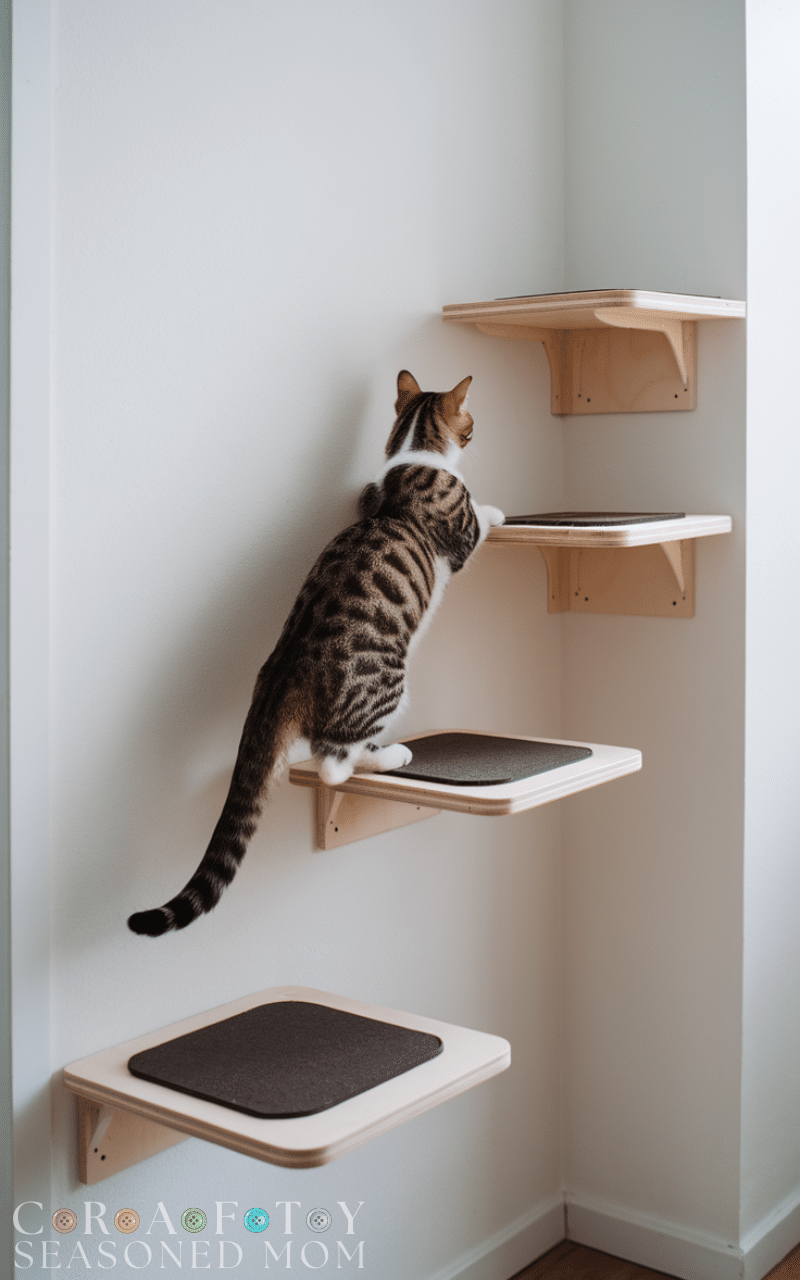
Installing floating cat steps is an elegant way to give your pet vertical movement without bulky, carpeted cat trees. You can attach small wooden platforms to the wall at staggered intervals, allowing your cat to “walk” up the wall toward a higher perch.
These steps are inexpensive and easy to mount, encouraging essential exercise in confined living spaces. Decorating them with non-slip pads or soft fabric ensures your cat can jump with confidence, making your home visually interesting while supporting your pet’s physical health.
7. Repurposed Bookshelf Cat Haven
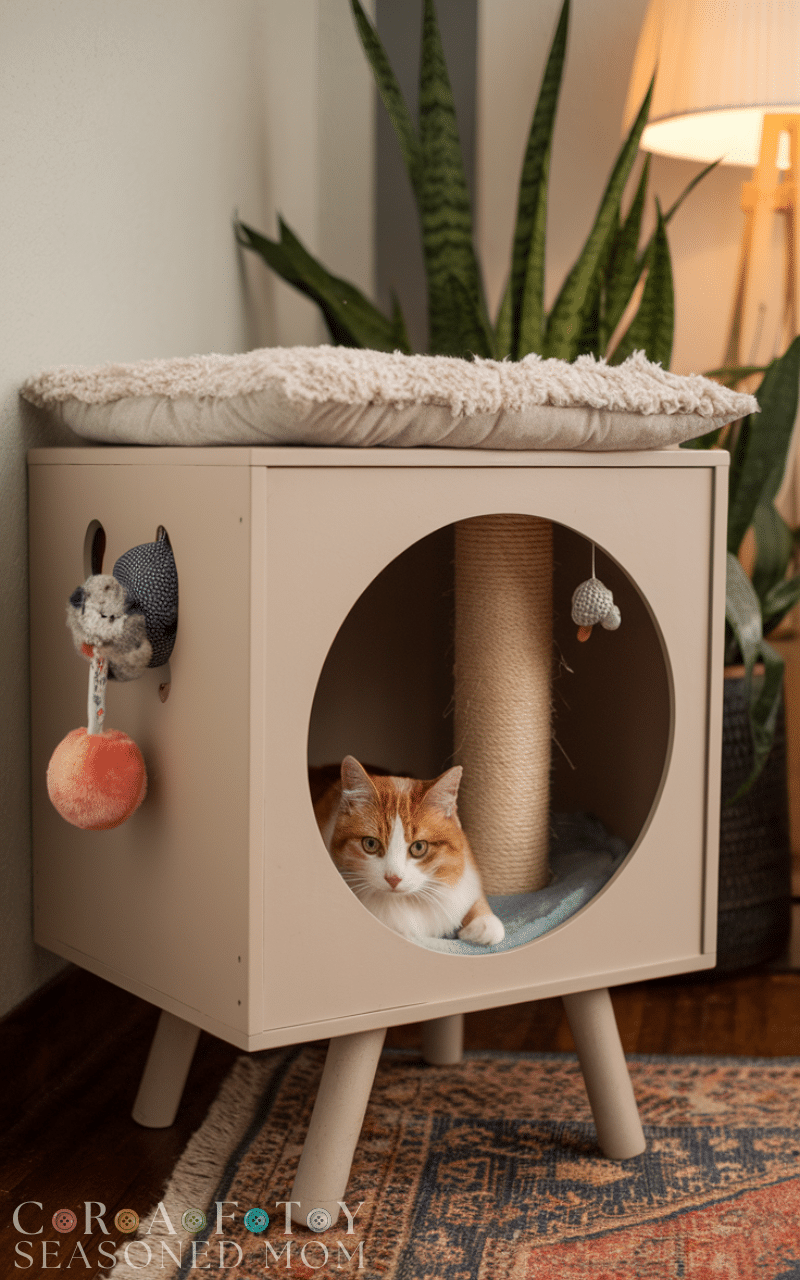
Turning an old bookshelf into a cat haven is a perfect way to use vertical furniture creatively. By removing a few doors or emptying the bottom shelves, you give your cat a built-in climbing opportunity without needing any extra square footage in your apartment.
You can line the shelves with cushions, scratching pads, or even small toys to keep your pet entertained. This project is incredibly inexpensive if you use a piece of furniture you already own, resulting in a cozy and organized space that maximizes every inch of your home.
6. Curtain Hideaway
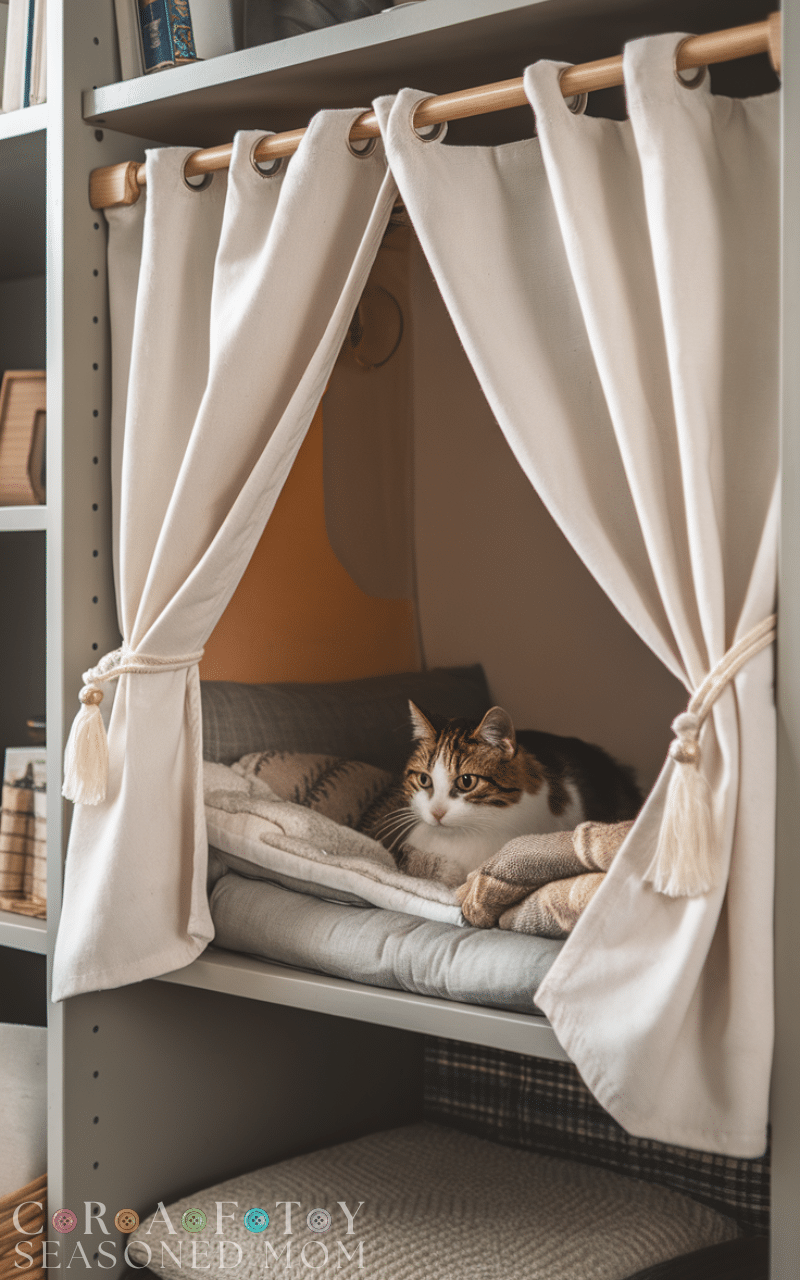
Adding a curtain hideaway is a smart idea for creating a private enclosed area in any corner or under a table. You can hang a lightweight curtain from a tension rod and drape it to form a soft, secretive den where your cat can escape for an undisturbed nap.
Placing a heated pad or a soft blanket inside makes it the ultimate retreat for shy or sleepy pets. This is an extremely flexible and inexpensive solution that is perfect for renters, as it is easy to set up and take down without damaging walls.
5. DIY Tunnel Using PVC or Cardboard
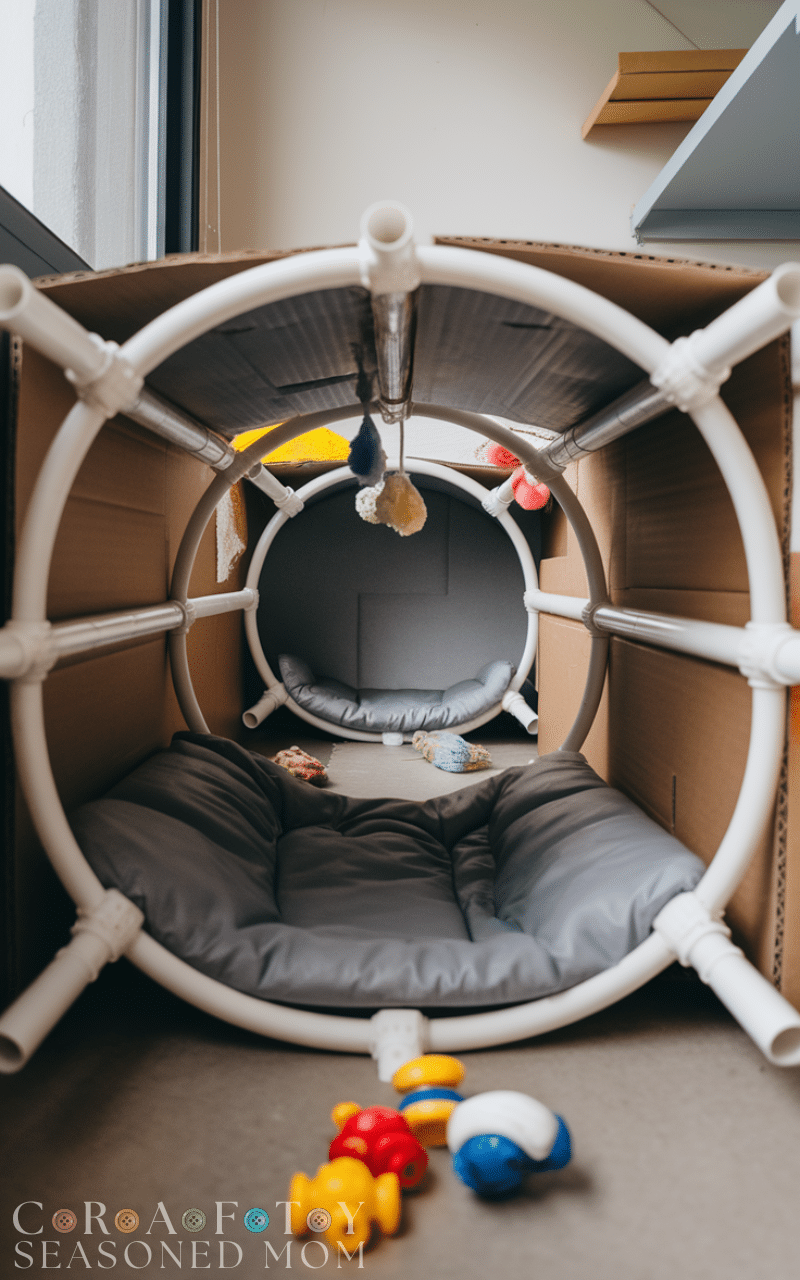
A tunnel is an excellent interactive element that encourages exercise and satisfy’s a cat’s instinct to prowl through narrow spaces. You can use large-diameter PVC pipes or heavy-duty cardboard tubes to create a series of connected tunnels along a wall or under a bed.
Adding soft padding or a bit of carpet inside ensures a quiet and comfortable experience. These tunnels can be tucked away to maximize space while providing hours of entertainment, proving that DIY cat ideas can be both fun and space-saving.
4. Repurposed Drawers as Cozy Beds
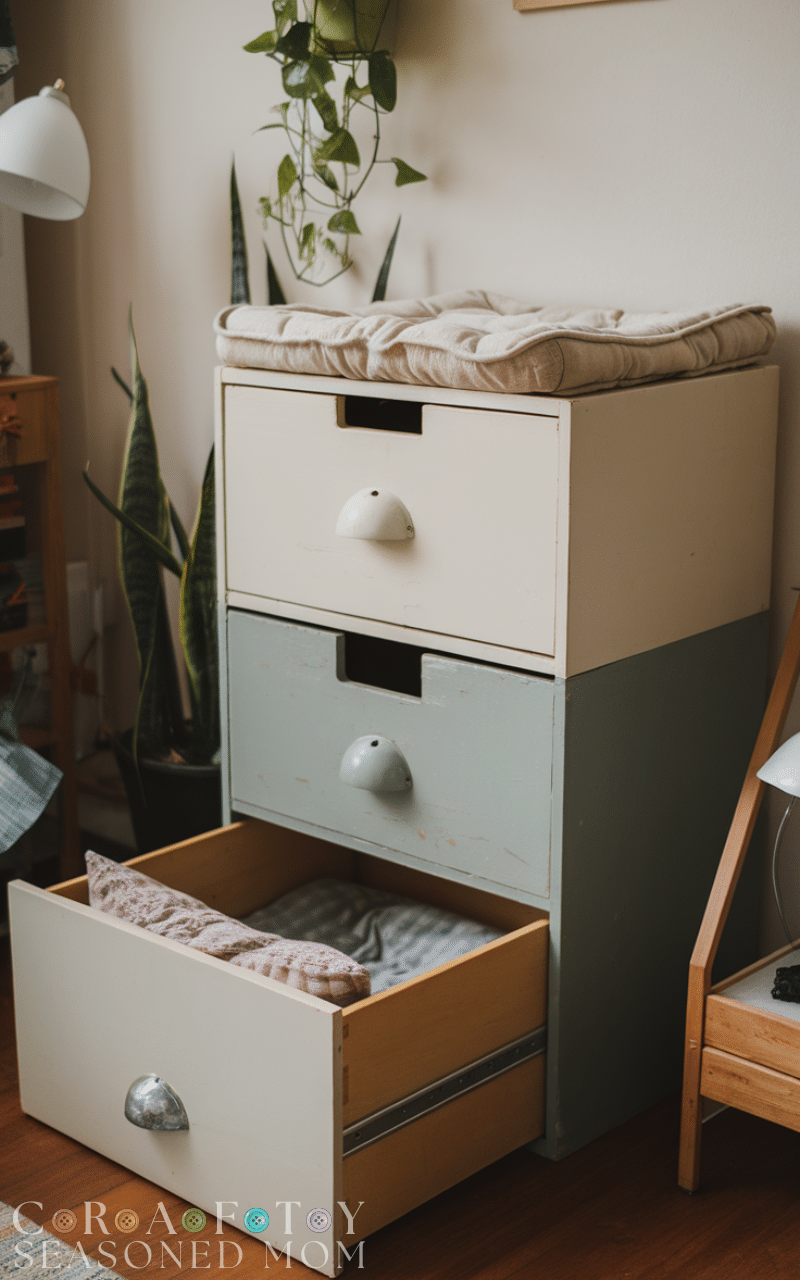
Using old dresser drawers is a clever way to create low-profile beds that tuck away easily. You can add cushions or pillows to the drawer and stack them in a “staircase” fashion or place them in the bottom of a closet to provide an instant, secure sleeping spot.
Drawers give cats a sense of security due to their sturdy sides, and the project requires almost no effort or cost. They are lightweight and easy to clean, making them a functional and budget-friendly choice for any small-space cat owner.
3. Hanging Wall Pocket Beds
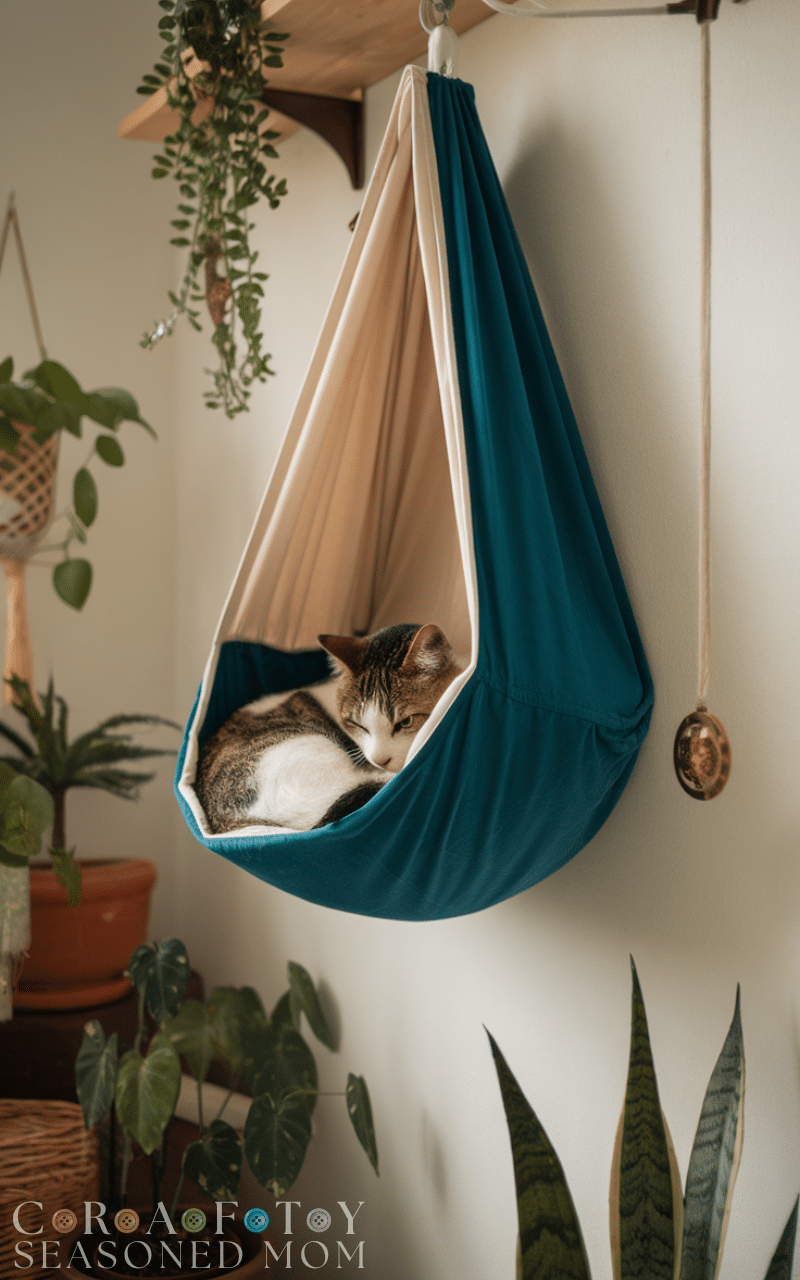
Hanging wall pocket beds are ideal for those who want to avoid floor clutter entirely. You can sew or repurpose heavy-duty fabric pockets—similar to wall-mounted mail organizers—and attach them securely to a wall or the side of a sturdy cabinet.
Cats enjoy curling inside these deep pockets and observing their surroundings from a safe, high vantage point. The materials are lightweight and easy to install, keeping your small spaces uncluttered while maximizing the available vertical real estate for your pet.
2. Multi Level Shelf Cat Playground
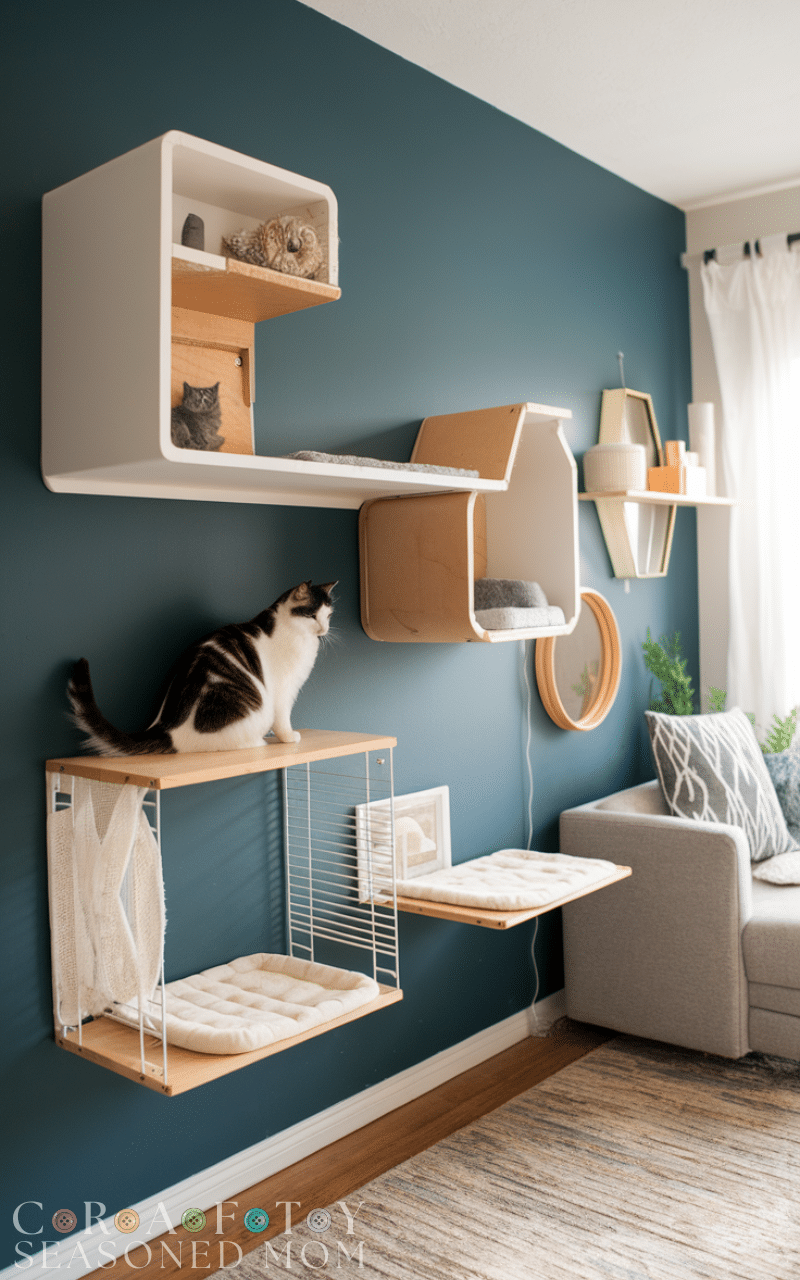
A multi-level shelf setup is the gold standard for small-space cat ownership because it provides a massive amount of “territory” without using the floor. By attaching staggered shelves of different sizes, you create a complex playground for climbing, jumping, and sleeping.
You can include small bridges or ramps to connect the levels, making the wall a dynamic part of your cat’s daily life. This setup is flexible and uses wall space creatively, keeping your cat active and giving them a high-up retreat away from any household commotion.
1. Indoor Hanging Tent or Teepee
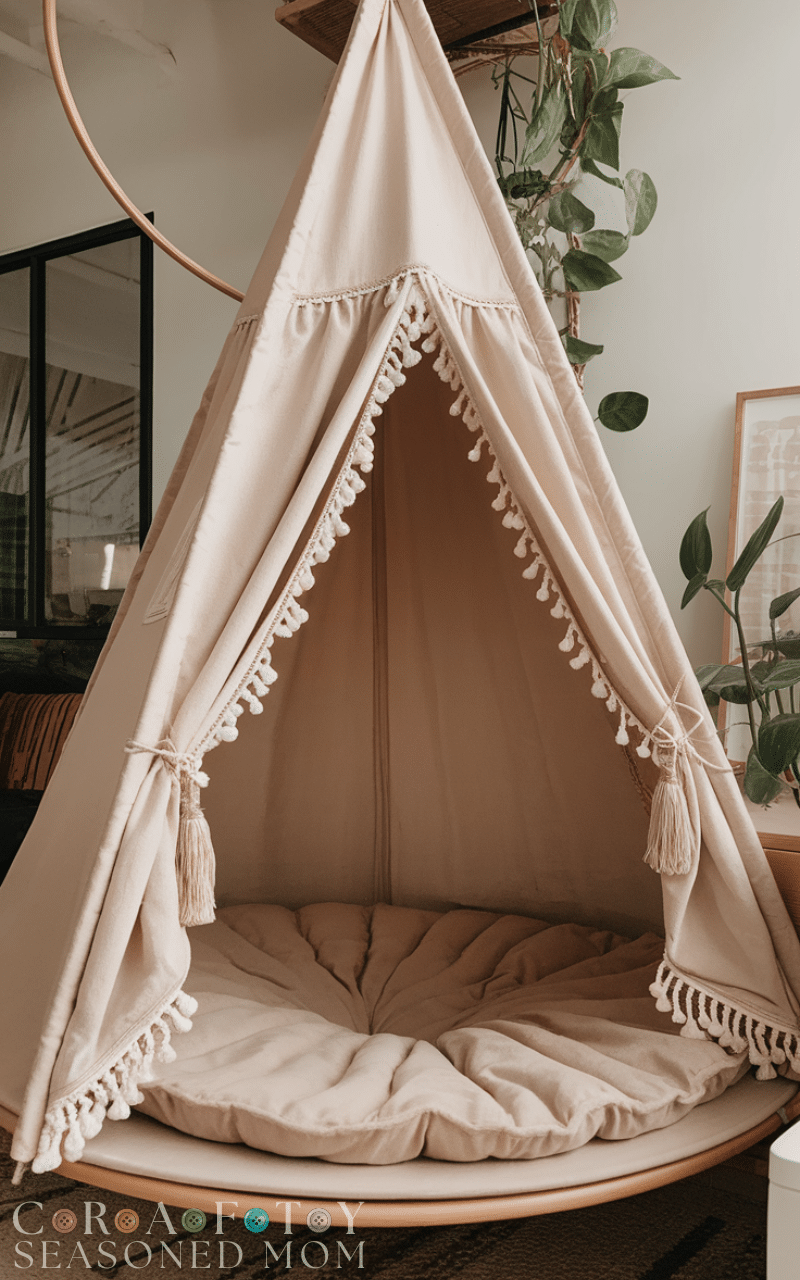
Adding a small hanging tent or fabric teepee creates a whimsical and private retreat for your cat. You can suspend it from the ceiling in a corner or place it on top of a low dresser, adding a plush circular cushion inside for the ultimate “glamping” experience.
Cats love the feeling of being enclosed and hidden while they sleep. These tents are inexpensive to buy or easy to make with scrap fabric and a few hoops, providing a stylish and functional nook that your cat will claim as their own in no time.
Conclusion
Creating a cozy sanctuary for your cat doesn’t have to be expensive or take up your valuable living space. These DIY cat nook ideas for small spaces allow you to maximize your vertical area while providing your pet with the comfort, exercise, and privacy they need to thrive.
