

Inheriting an older home or completing a major remodel often leaves you with a series of cold, gray spaces that feel more like construction zones than a sanctuary. The problem with designing a Relaxing Japandi Bedroom is finding that perfect equilibrium between the functional minimalism of Japanese design and the warm, “hygge” comfort of Scandinavian style.
It is incredibly frustrating to realize that after seven months of construction, turning a cramped 3 BR / 1 BA into a modern 3 BR / 2 BA, the rooms still feel clinical because they lack the organic soul that makes a home truly livable.
Many homeowners struggle with “fuzzy” design boundaries, wondering if a light fixture is “too interesting” or if their furniture choices are leaning too heavily toward a Western aesthetic. Without a clear vision for low-profile aesthetics and contiguous wooden materials, your bedroom can end up looking like a mismatched collection of IKEA parts rather than a cohesive, peaceful retreat.
While you are deciding on the right accent chair or building custom sofa tables, you might want to ensure your entryways provide a similar sense of calm; for more inspiration on clean lines and natural light, you can read my article on 15 Beautiful Scandinavian Hallway Designs. To solve the “gray and cold” dilemma of your Relaxing Japandi Bedroom, focus on warming up the surfaces through DIY projects like lime wash walls.
This technique adds a soft, chalky texture that reflects light beautifully and provides a much more organic feel than standard flat paint. When selecting furniture, look for low-profile pieces like the Floyd Sink Down or Sundays Movie Night sectionals. While these soft, comfortable pieces may require occasional re-fluffing, their grounded silhouette is a hallmark of Japandi style, creating a space where it is almost too easy to fall asleep.
The ultimate solution for those moving “diligently and slowly” due to a limited budget is to prioritize a few high-quality, natural elements that bridge the gap between two cultures. Incorporating a slatted coffee table or floating wooden shelves creates a sense of continuity that anchors the room without the need for an expensive interior designer. Large indoor plants, such as a Fiddle Leaf Fig or a tall Bird of Paradise, add a burst of life that softens the minimal furniture and makes the space.
By blending the tasteful sparseness of modern minimalism with the “soul” of natural wood and soft drapes, you transform your renovated house into a sanctuary. You’ll find that when you move away from the “all-gray” past and lean into warm, earthy tones, your bedroom finally becomes the serene, minimalist haven you’ve been dreaming of for years.
16. Low Platform Wooden Beds
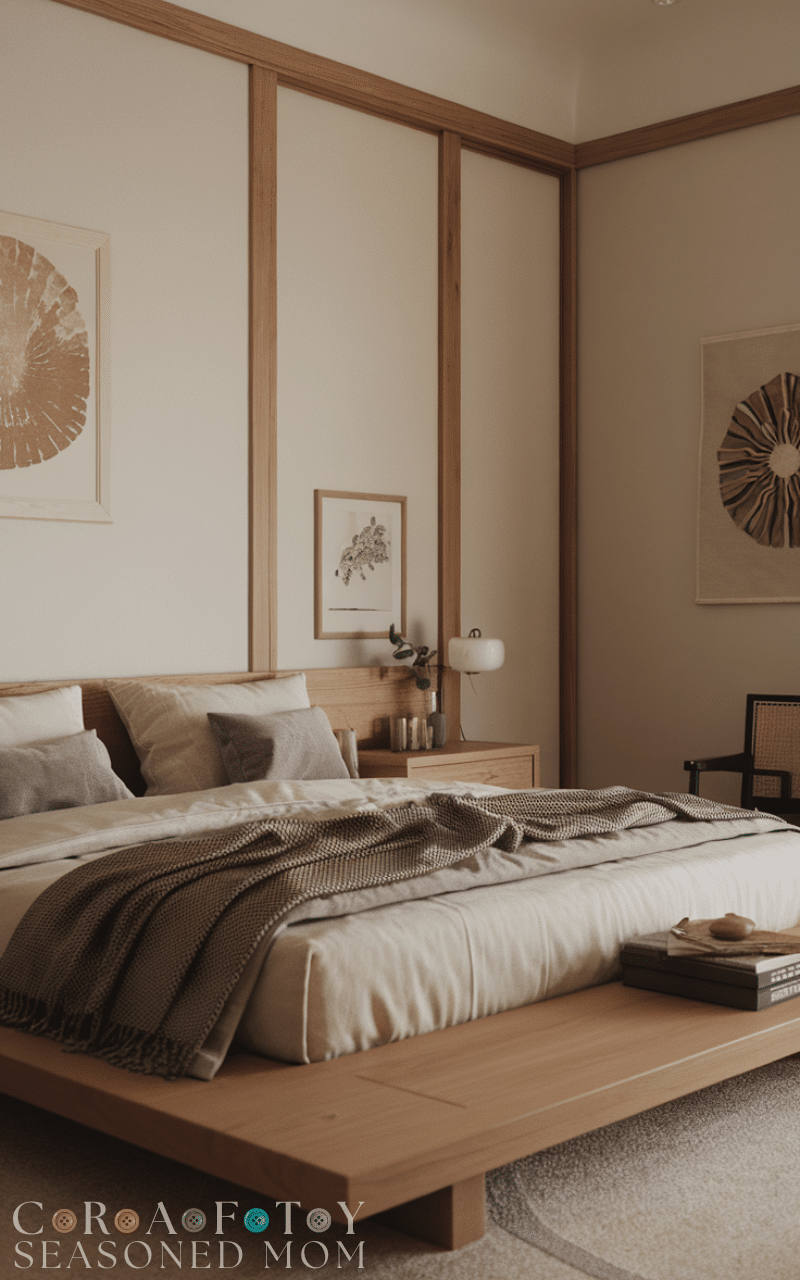
Low platform wooden beds are a staple in relaxing Japandi bedroom designs. Their simple silhouette keeps the space feeling open and grounded, while natural wood adds warmth and texture. Pairing this bed with neutral bedding creates a serene environment that encourages rest. These beds often come without bulky frames, giving the room a minimalistic look that complements the Japandi aesthetic, and their understated elegance makes them versatile enough to match a variety of decor styles. Relaxing Japandi Bedroom, creating a relaxing focal point that immediately elevates the calm and cozy vibe of your bedroom.
15. Neutral Color Palettes
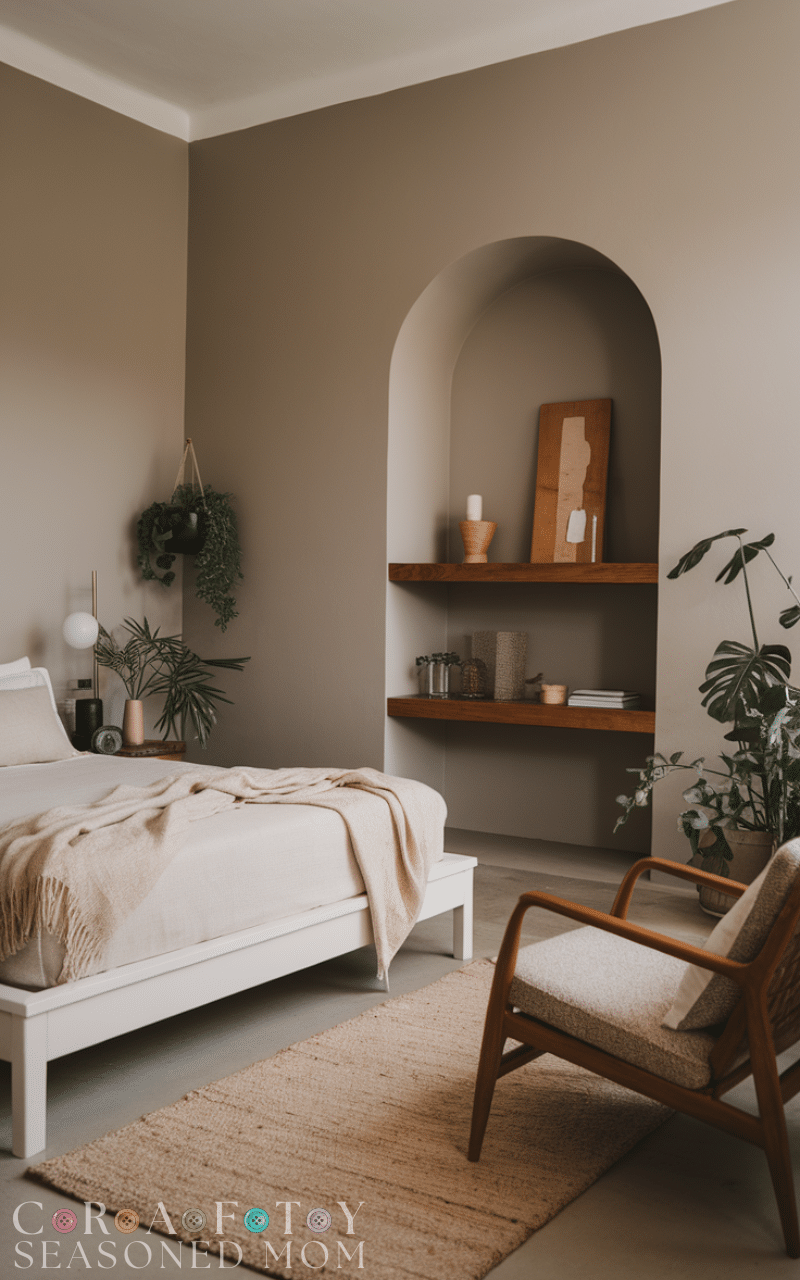
Using neutral color palettes is essential for relaxing Japandi bedroom designs. Soft tones like beige, taupe, cream, and muted gray create a calm and balanced atmosphere. These colors allow furniture and decor to shine subtly, preventing the space from feeling busy or overwhelming. Neutral palettes also enhance natural light, making the room appear brighter and more open, while providing a flexible backdrop for wooden textures and minimalist accents. Incorporating subtle color variations keeps the space visually interesting yet peaceful, making your bedroom a relaxing retreat where simplicity meets sophistication, perfectly in line with Japandi principles.
14. Minimalist Storage Solutions
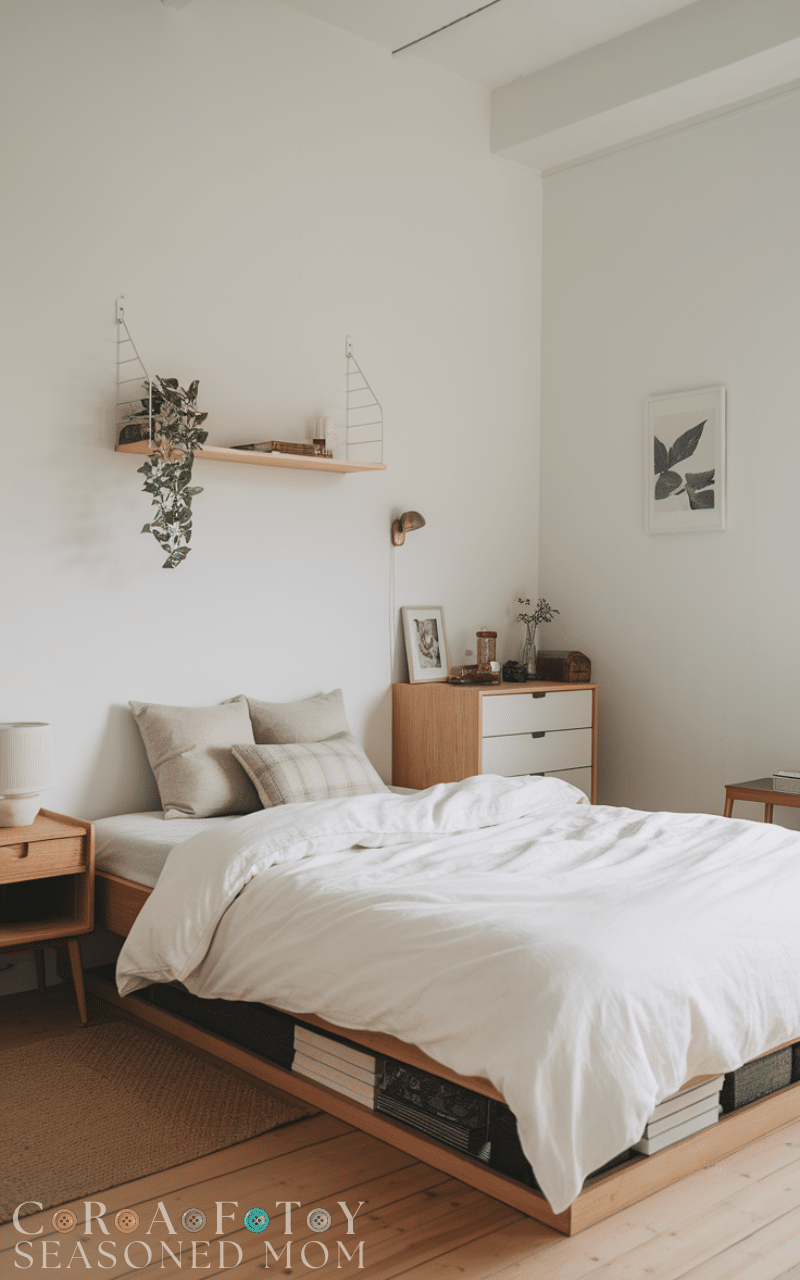
Minimalist storage solutions help maintain the uncluttered feel of relaxing Japandi bedroom designs. Floating shelves, under-bed storage, and discreet drawers keep belongings organized without taking up visual space. Choosing wooden or neutral-toned storage pieces ensures they blend seamlessly with the room’s aesthetic. By reducing clutter, these storage ideas enhance the room’s sense of calm, allowing the natural beauty of your decor to shine. Minimalist storage not only keeps the bedroom tidy but also supports mindfulness, creating an environment that’s peaceful and relaxing while staying true to the Japandi style.
13. Natural Textures and Materials
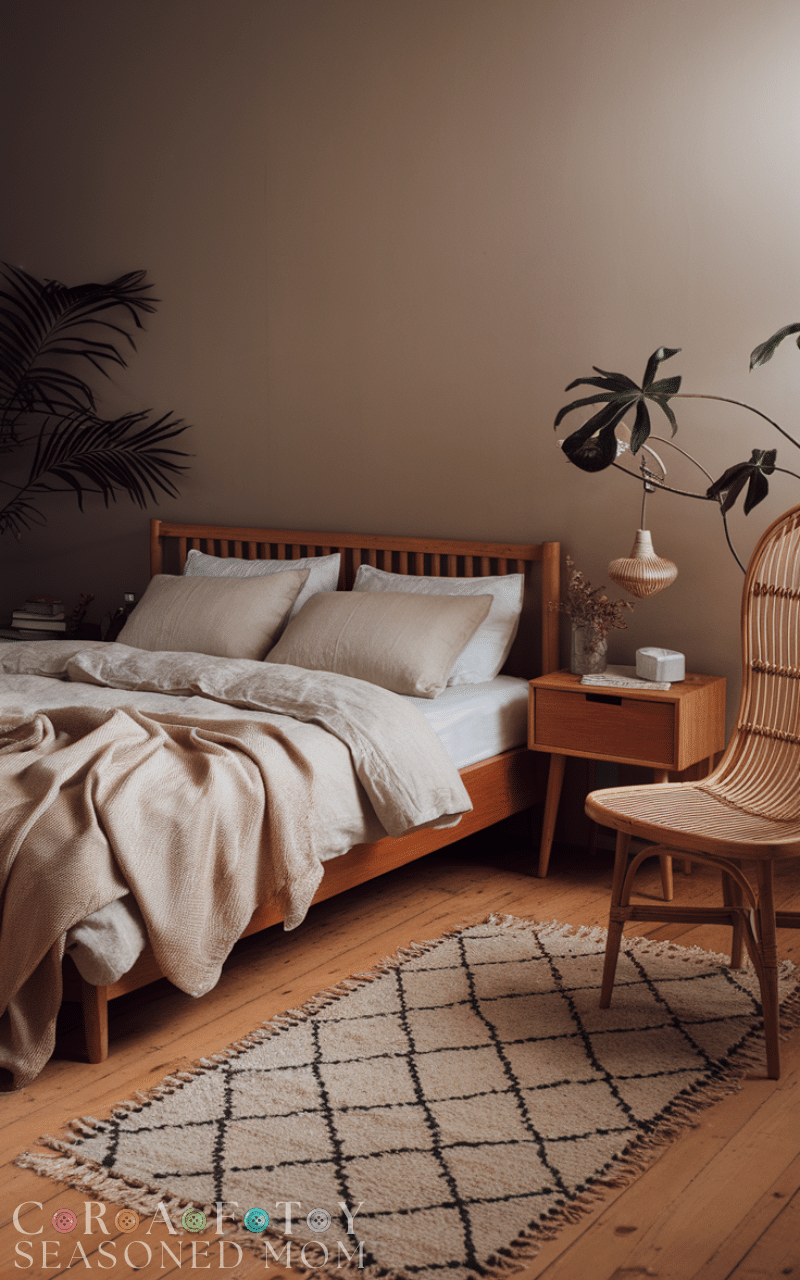
Incorporating natural textures and materials is key to relaxing Japandi bedroom designs. Elements like wooden furniture, rattan accents, linen bedding, and wool rugs add warmth and tactile comfort. These materials create a harmonious balance between simplicity and coziness, inviting relaxation. They also connect your indoor space to nature, enhancing the calming atmosphere. Combining various textures while keeping a soft, neutral palette ensures your bedroom feels layered but still uncluttered. This approach makes the space feel authentic, tranquil, and comforting, reflecting the essence of Japandi design where natural beauty and serene functionality coexist effortlessly.
12. Soft, Layered Lighting
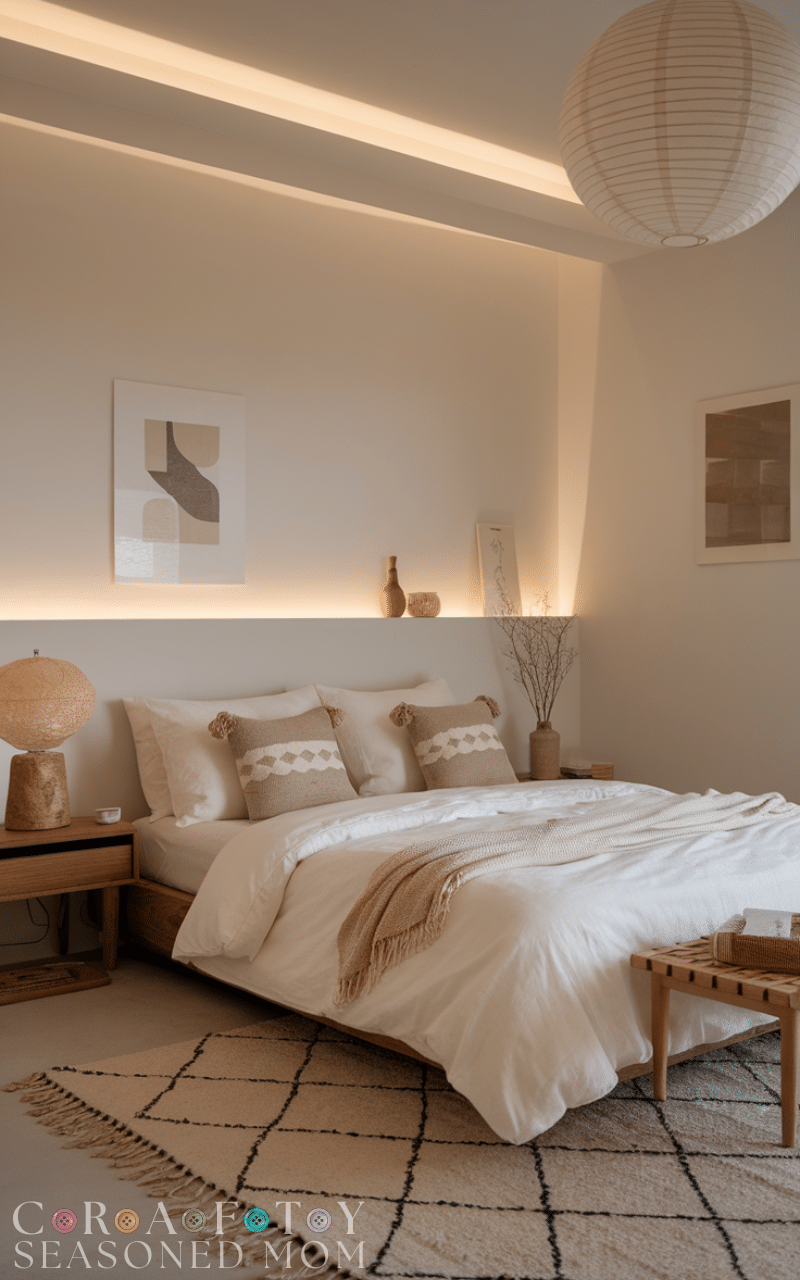
Soft, layered lighting is essential in relaxing Japandi bedroom designs. Combining paper lanterns, wooden lamps, and recessed lighting creates a warm, inviting atmosphere. Soft light reduces stress and enhances the cozy feel of the room. Layering different light sources allows you to adjust the mood for relaxation or reading. Using dimmers or lamps with natural textures adds visual interest without disrupting the minimalist vibe. Thoughtful lighting complements neutral tones and natural materials, highlighting the Japandi balance of simplicity and warmth, transforming your bedroom into a serene, relaxing retreat that promotes rest and mindfulness.
11. Indoor Plants and Greenery
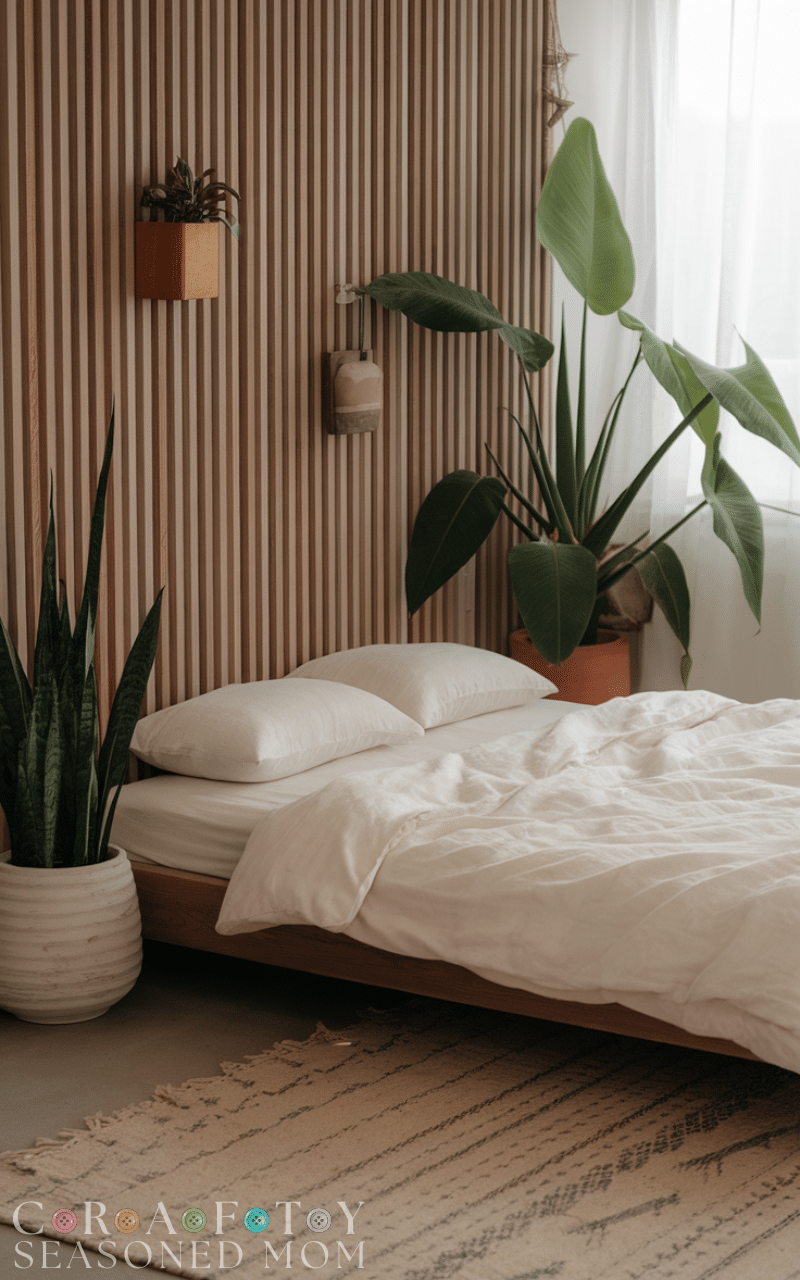
Adding indoor plants is a simple way to enhance relaxing Japandi bedroom designs. Greenery introduces life and freshness, connecting the space to nature while maintaining tranquility. Minimalist pots and strategic placement keep the aesthetic clean and uncluttered. Plants like bonsai, snake plants, or peace lilies require low maintenance and complement the neutral tones and natural textures of the room. The presence of plants also improves air quality and creates a calming atmosphere, reinforcing the relaxing vibe central to Japandi design. A touch of green can transform a simple bedroom into a peaceful, nature-inspired retreat.
10. Minimalist Artwork
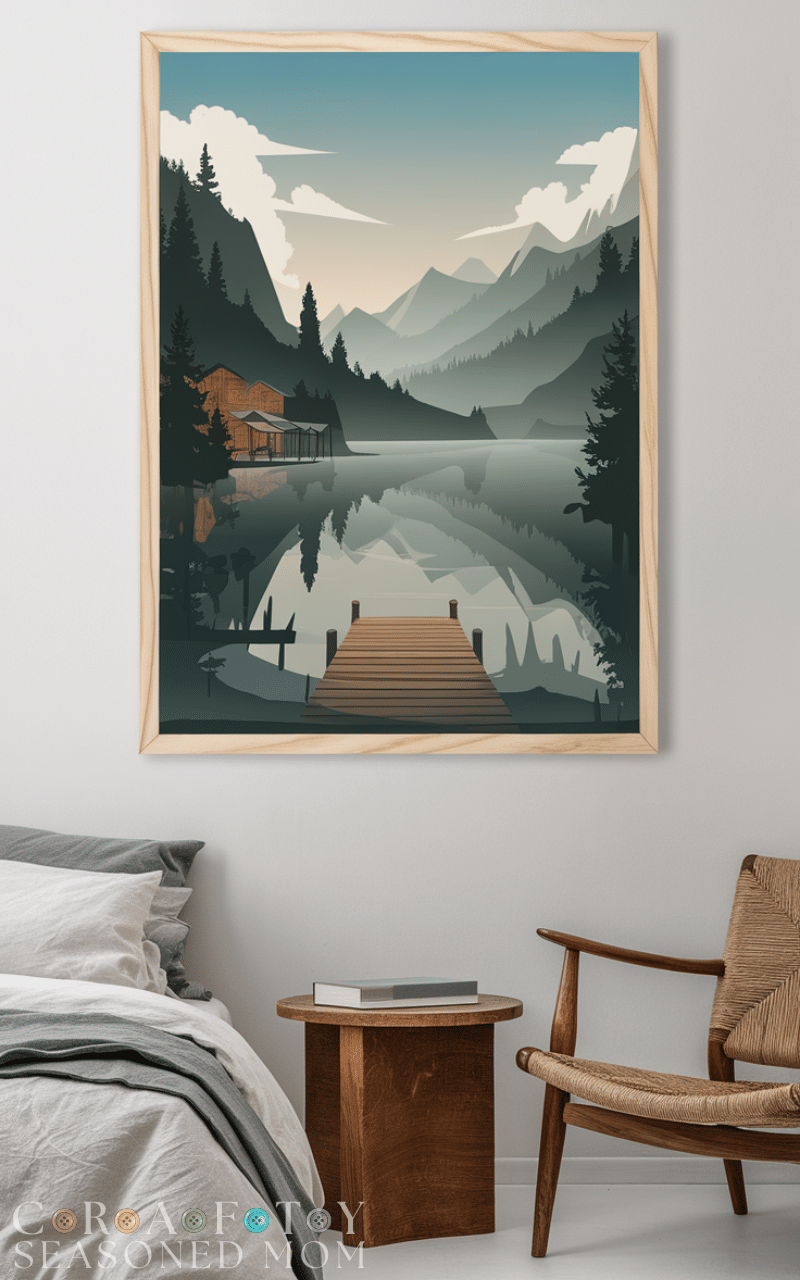
Minimalist artwork enhances relaxing Japandi bedroom designs by adding personality without clutter. Simple line drawings, neutral abstract prints, or small nature-inspired pieces complement the calming color palette and clean lines. Art should be understated to preserve the room’s serenity and avoid visual chaos. Framed in natural wood or neutral frames, the artwork integrates seamlessly into the overall design, providing subtle focal points. Carefully selected pieces can evoke tranquility and inspiration, reinforcing the relaxing atmosphere. Minimalist art balances elegance and simplicity, ensuring that your bedroom remains a peaceful sanctuary aligned with Japandi principles.
9. Tatami-Inspired Flooring
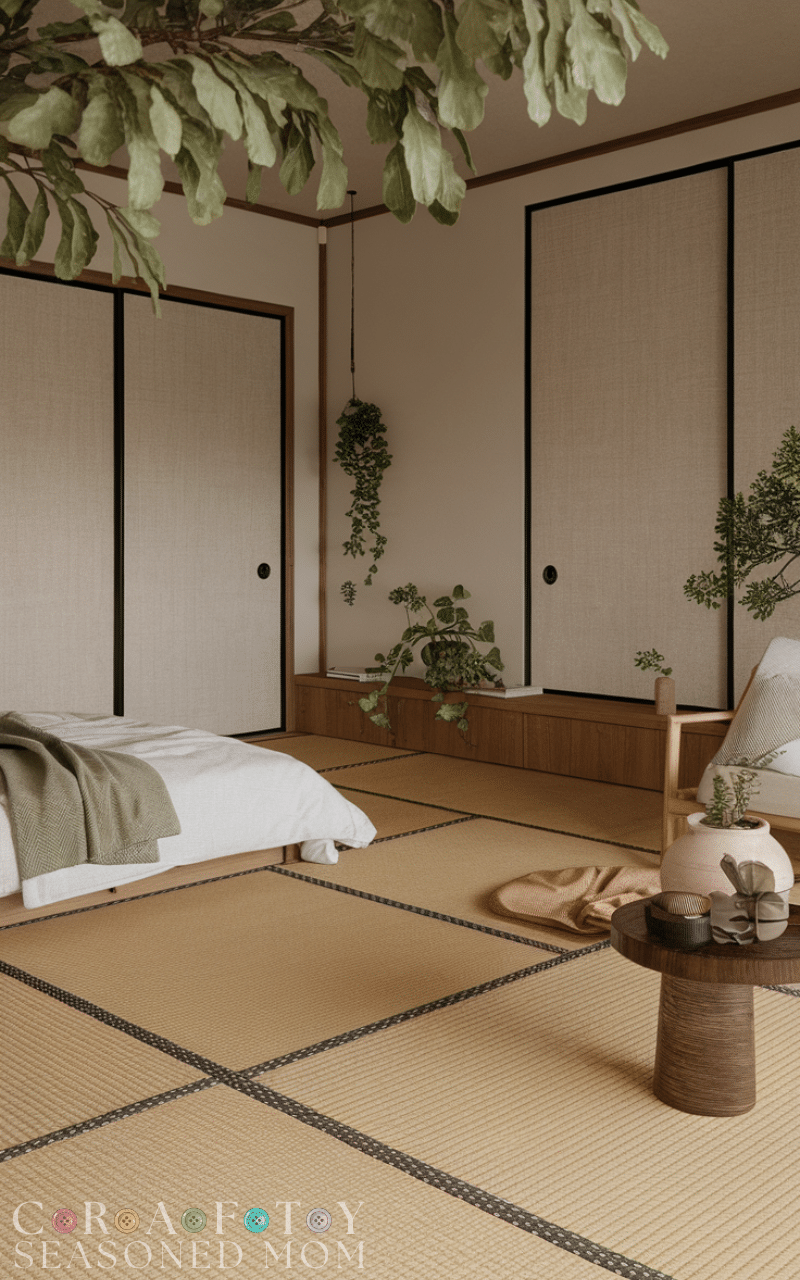
Tatami-inspired flooring adds authenticity to relaxing Japandi bedroom designs. Natural straw mats or soft beige rugs mimic traditional Japanese tatami, offering comfort underfoot and visual warmth. This type of flooring complements neutral palettes and wooden furniture, enhancing the minimalist aesthetic while promoting relaxation. Tatami-inspired textures also encourage a connection with nature and mindfulness, creating a soothing foundation for your bedroom. Its subtle design ensures that other elements, like furniture and decor, remain the focus. Incorporating tatami-inspired flooring strengthens the Japandi blend of Japanese minimalism and Scandinavian comfort, crafting a cozy, calming environment.
8. Simple Window Treatments
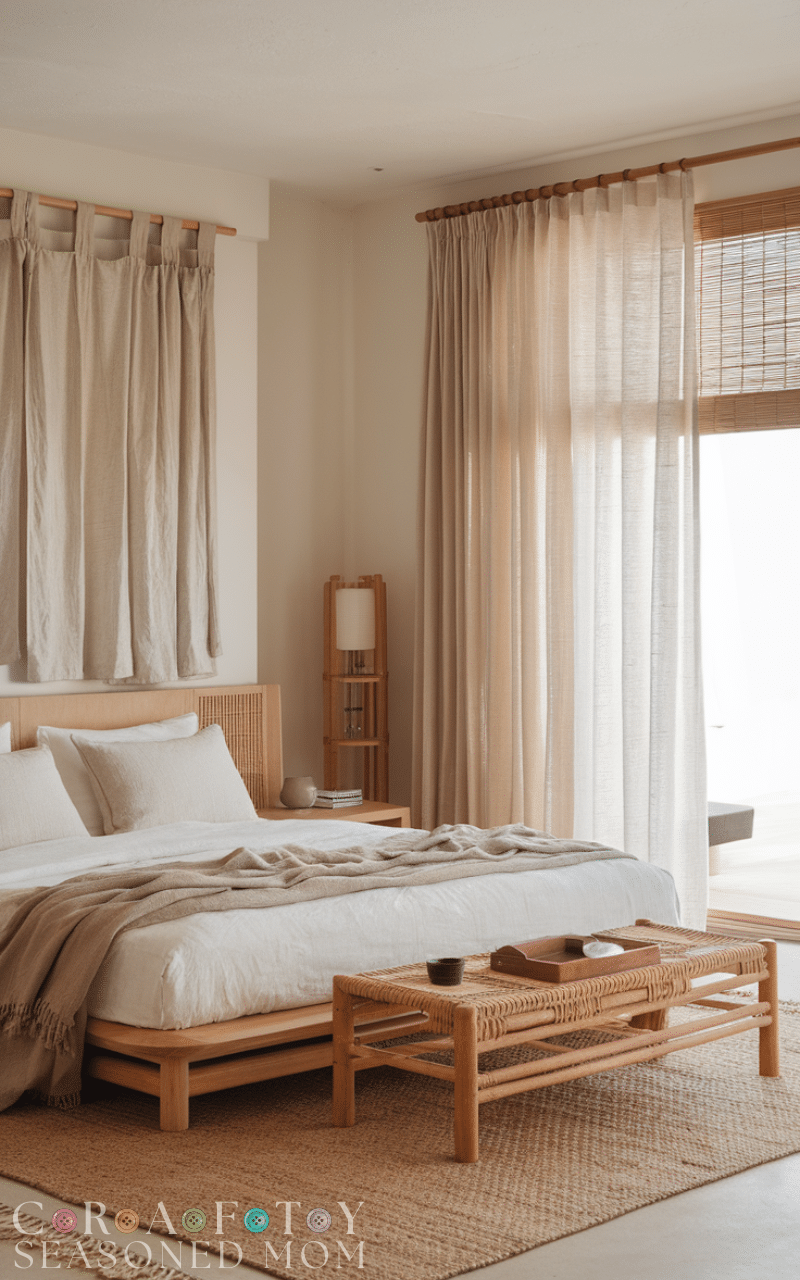
Simple window treatments are essential for relaxing Japandi bedroom designs. Lightweight linen curtains, bamboo shades, or neutral roller blinds allow soft natural light to filter in while maintaining privacy. Minimalist designs ensure that the windows do not overpower the room, preserving a clean and airy look. Natural fabrics tie into the Japandi emphasis on textures, complementing wooden furniture and neutral palettes. Properly chosen window treatments control ambiance and temperature while enhancing tranquility. By keeping designs understated and functional, you maintain the balance of simplicity and warmth, making your bedroom a serene and inviting retreat.
7. Cozy Textiles and Bedding
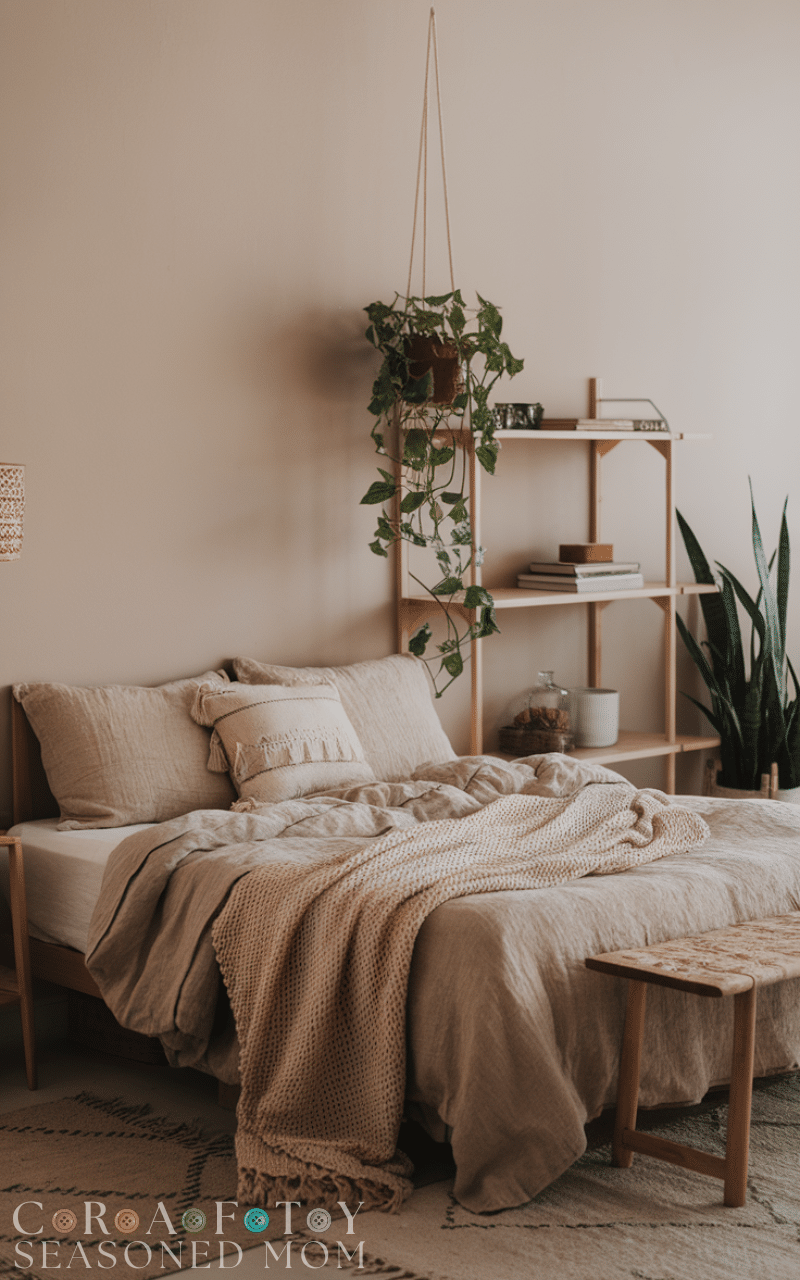
Cozy textiles and bedding are vital in relaxing Japandi bedroom designs. Linen sheets, wool throws, and soft cotton blankets add comfort and warmth without overwhelming the minimalist aesthetic. Layering textures subtly enhances visual interest and tactile pleasure, encouraging relaxation and restful sleep. Neutral colors reinforce the serene atmosphere, while high-quality materials elevate the room’s overall feel. Choosing simple patterns or solid tones keeps the focus on calmness and tranquility. Thoughtful selection of textiles aligns with Japandi principles, combining simplicity, functionality, and comfort, resulting in a cozy bedroom that feels inviting, peaceful, and perfectly balanced.
6. Low-Profile Nightstands
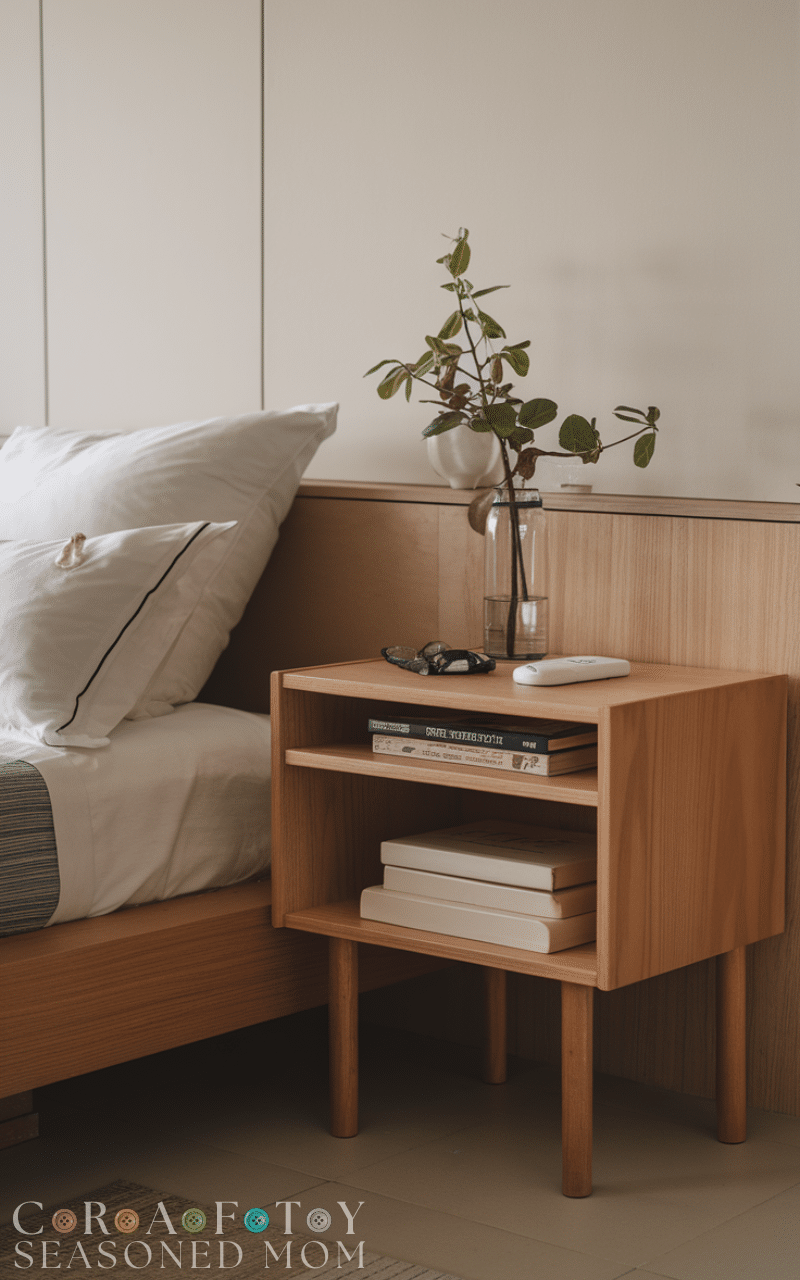
Low-profile nightstands are perfect for relaxing Japandi bedroom designs. Their understated height complements low platform beds and keeps the focus on open space. Minimalist wooden nightstands or neutral-toned pieces provide storage for essentials without cluttering the room. They enhance symmetry and balance, maintaining the calm aesthetic central to Japandi style. Choosing designs with clean lines, subtle textures, and functional storage creates a harmonious environment. Low-profile nightstands also allow for decorative accents like small plants or simple lamps, reinforcing the relaxing and cozy ambiance that makes Japandi bedrooms a perfect retreat for rest and serenity.
5. Natural Wood Accents
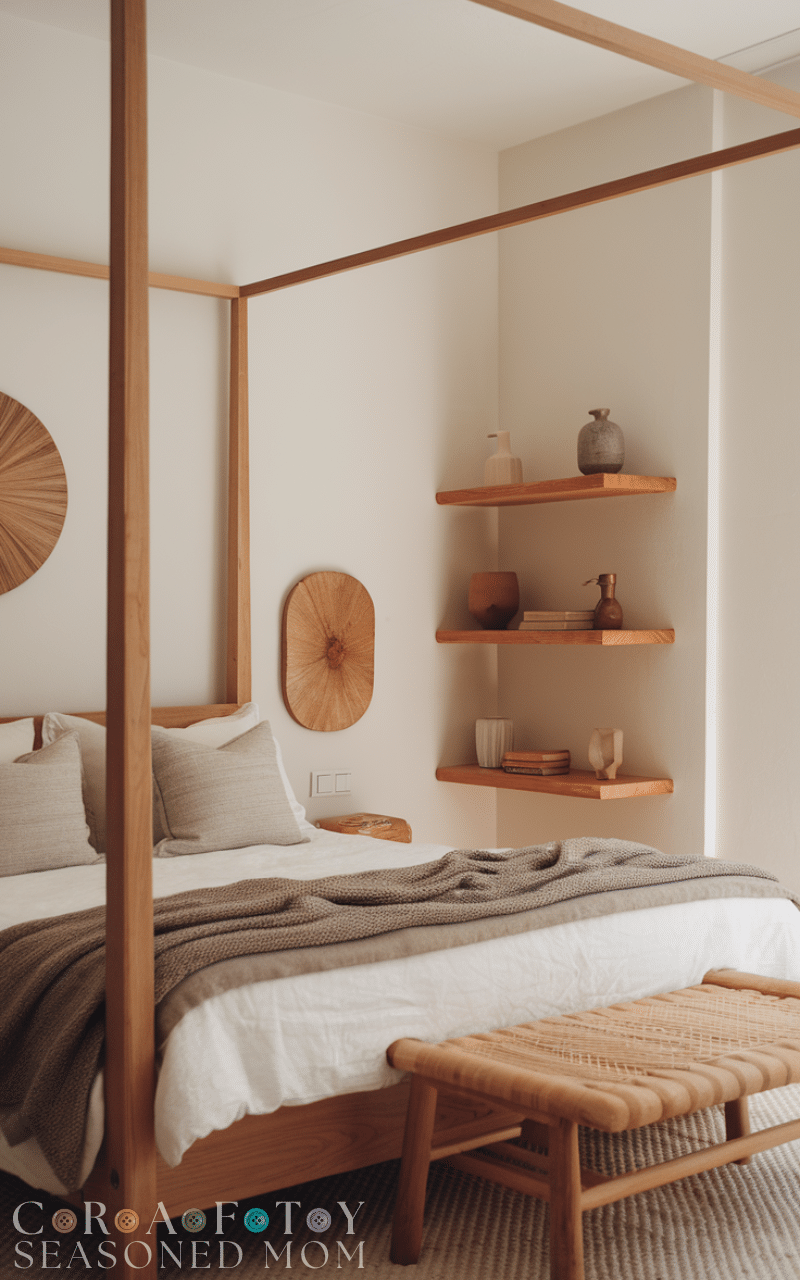
Natural wood accents are key in relaxing Japandi bedroom designs. Wooden bed frames, shelving, or décor elements bring warmth and organic charm to the room. The natural grains and textures provide visual interest without overwhelming the minimalist design. Wood complements neutral tones and soft textiles, enhancing the cozy atmosphere. Using sustainably sourced or untreated wood aligns with Japandi principles of simplicity and mindfulness. These accents create a harmonious connection with nature, promoting relaxation and calm. Integrating wooden elements thoughtfully throughout your bedroom helps maintain balance, beauty, and tranquility while staying true to the essence of Japandi style.
4. Decluttered Surfaces
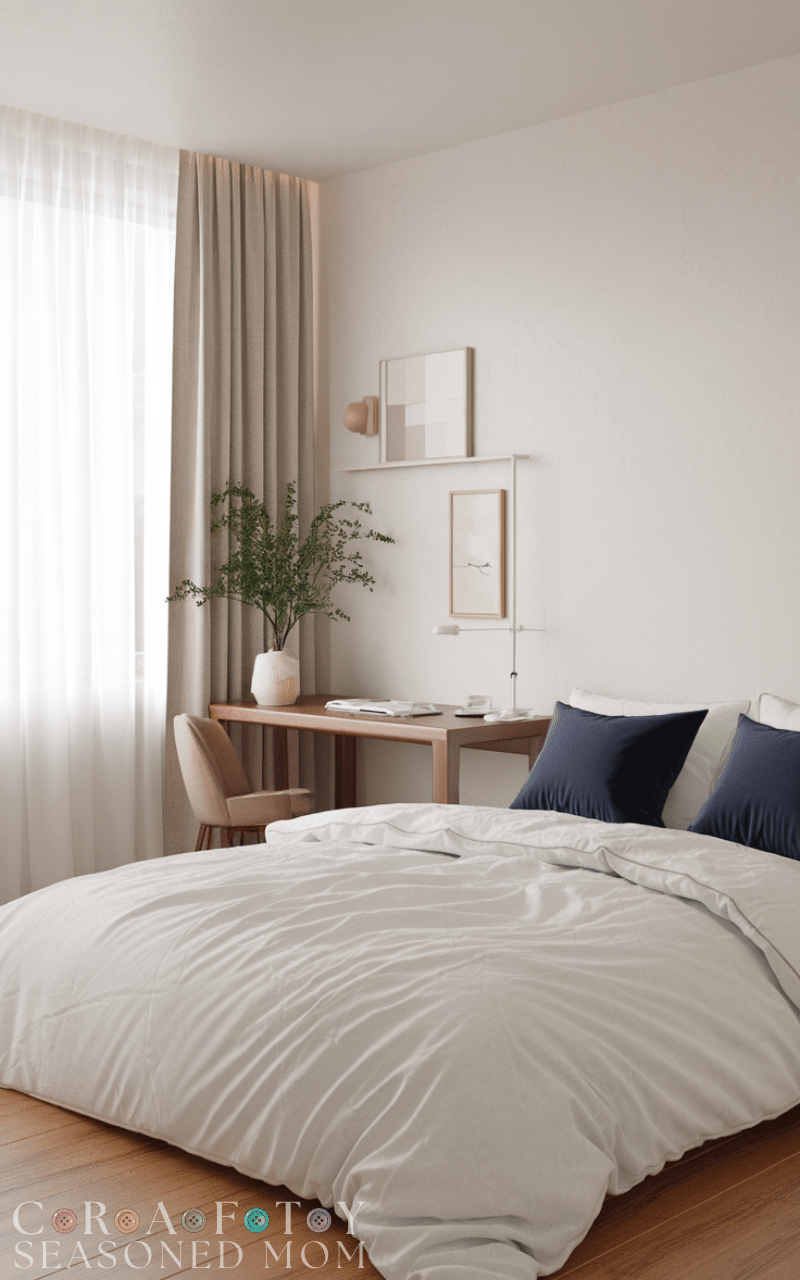
Decluttered surfaces are essential in relaxing Japandi bedroom designs. Clear bedside tables, minimalist desks, and tidy shelves reinforce the sense of calm and simplicity. By reducing visual noise, you allow natural materials, textures, and subtle decor to shine. Decluttered surfaces encourage mindfulness and relaxation, making it easier to unwind and enjoy the serene environment. Storage solutions like baskets, drawers, or hidden compartments support this aesthetic while keeping essentials accessible. Maintaining clean, open surfaces is a simple yet powerful way to enhance the peaceful, minimalistic vibe that defines Japandi bedrooms, creating a space that feels light, airy, and welcoming.
3. Functional Multi-Purpose Furniture
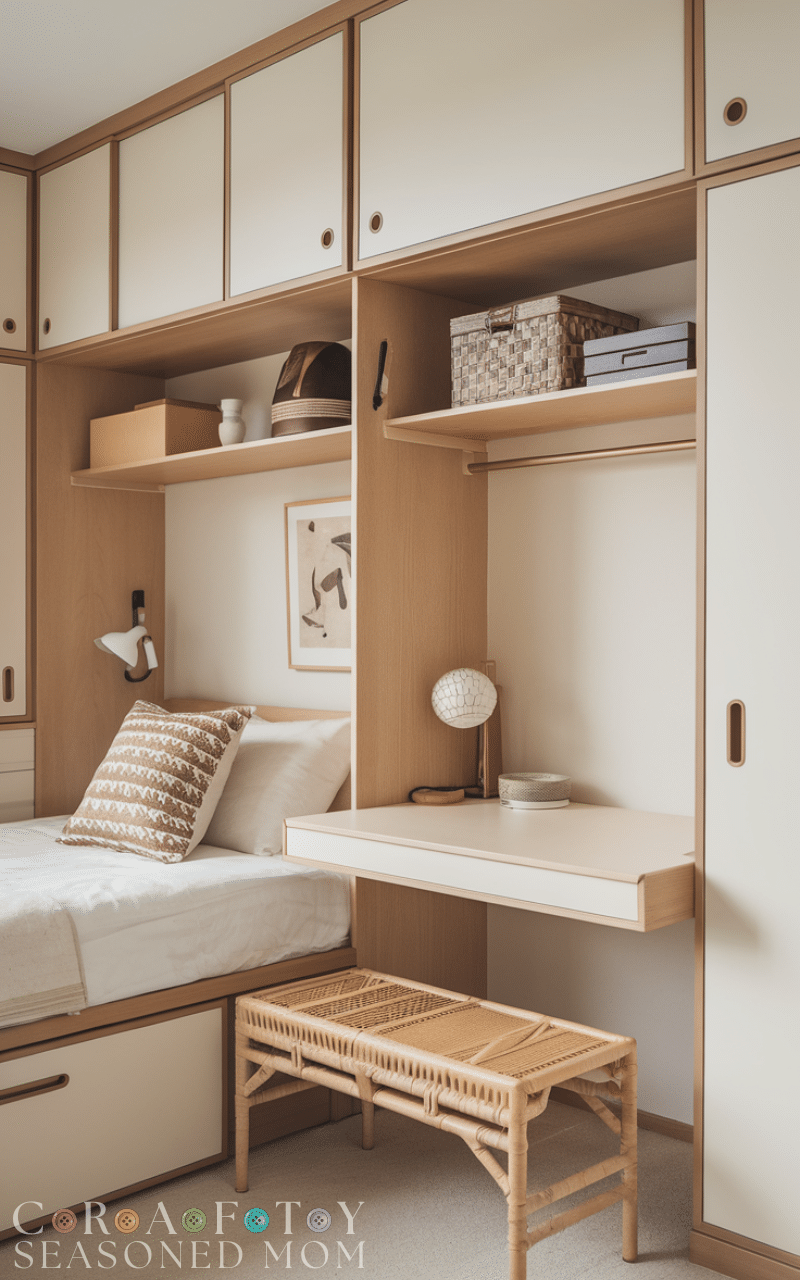
Functional multi-purpose furniture suits relaxing Japandi bedroom designs perfectly. Pieces like beds with built-in storage, foldable desks, or benches that double as seating keep the room tidy and versatile. This approach aligns with Japandi principles of practicality and minimalism, allowing you to maintain calm while meeting daily needs. Choosing furniture in neutral tones and natural materials ensures harmony with the overall design. Multi-purpose furniture maximizes space without sacrificing aesthetics, keeping the room uncluttered and serene. Incorporating these pieces strengthens the balance between simplicity, functionality, and comfort, making your bedroom a relaxing, efficient, and stylish retreat.
2. Calming Decor Elements
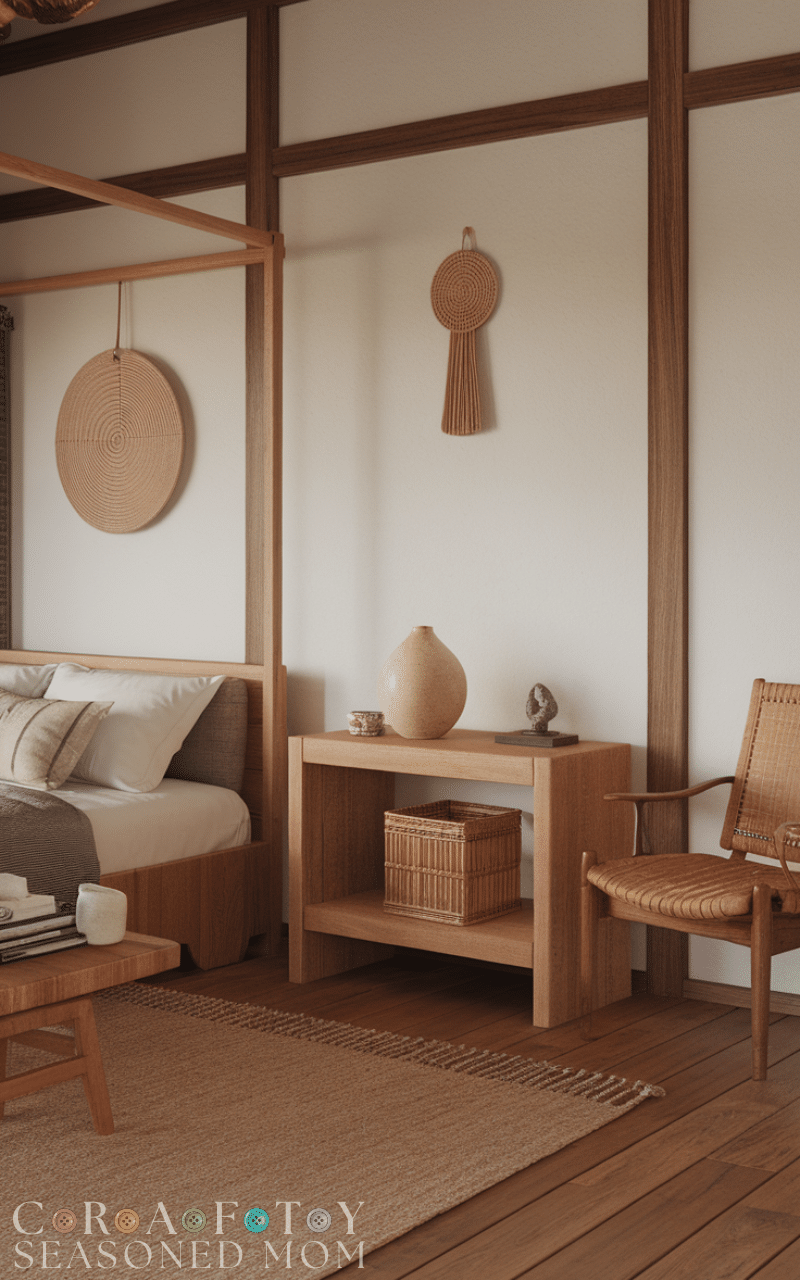
Calming decor elements enhance relaxing Japandi bedroom designs. Items like ceramic vases, woven baskets, or small zen-inspired sculptures add personality while keeping the minimalist aesthetic intact. Choosing natural, neutral-toned, or muted decor ensures the space remains soothing and uncluttered. These subtle accents reinforce a sense of tranquility and mindfulness, creating a bedroom that feels like a serene retreat. The key is balance—incorporate decor that enhances warmth and visual interest without overwhelming the clean lines and simplicity central to Japandi design, resulting in a space that’s aesthetically pleasing, relaxing, and emotionally comforting.
1. Mindful Space Arrangement
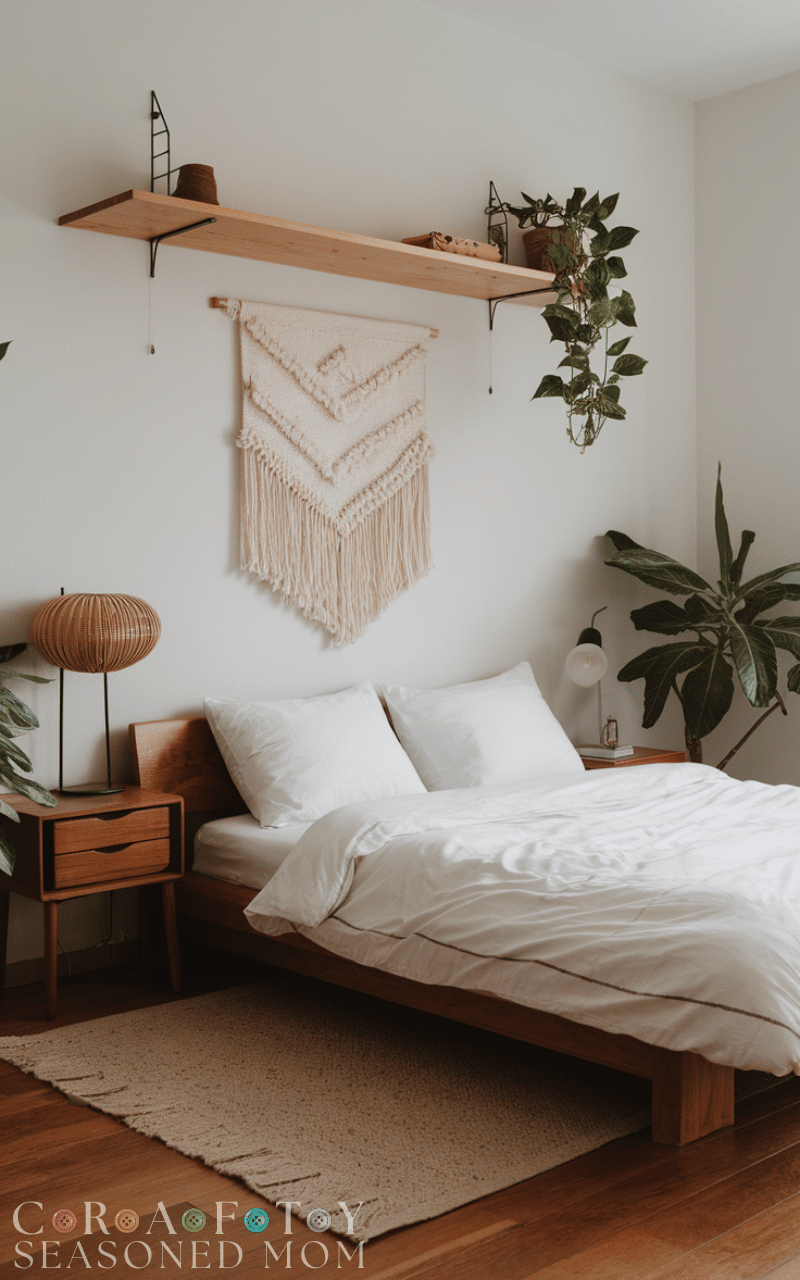
Mindful space arrangement is crucial in relaxing Japandi bedroom designs. Placing furniture strategically ensures smooth flow and a balanced look, keeping the room open and uncluttered. Prioritize symmetry and simplicity, allowing natural light to illuminate key areas and highlighting textures and materials. Avoid overcrowding and leave breathing room for the eye to rest. Thoughtful arrangement supports relaxation, reduces stress, and emphasizes the harmony between Japanese minimalism and Scandinavian coziness. Mindful layout transforms your bedroom into a peaceful sanctuary, making it easier to unwind, sleep well, and enjoy the serene, calming atmosphere that defines Japandi style.
Conclusion
Relaxing Japandi bedroom designs combine Japanese minimalism with Scandinavian warmth, creating serene, stylish spaces that encourage rest and mindfulness. By incorporating neutral tones, natural textures, minimalist furniture, and thoughtful decor, you can transform any bedroom into a calming retreat. Use these 16 ideas to design a bedroom that’s both functional and aesthetically pleasing, enhancing your comfort and well-being. Don’t forget to subscribe to our blog for more tips on relaxing Japandi bedroom designs and other inspiring home ideas!
